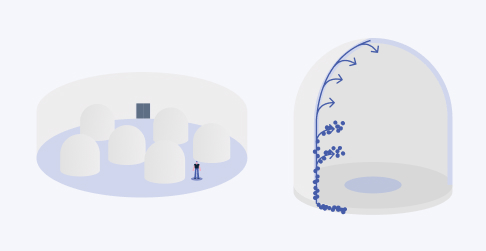
Save Our Species is a video game focused on ecosystem and biodiversity preservation.
The concept revolves around the player taking on the role of a forest ranger, tasked with finding and rescuing endangered species. The core challenge lies in making difficult decisions—out of eight species, only five can be saved. This limitation forces players to think critically, creating a metaphor for inequality in conservation efforts.
Additionally, the game highlights the importance of collective action in protecting endangered species, emphasizing that saving them often requires more than just individual efforts. This is reinforced through the game's setting, where a laboratory has limited space to care for rescued animals.
Context
This project was developed as part of the Digital Games course, centered around the theme of the "European Green Deal." The specific focus was on "Environment and Oceans," emphasizing the protection of biodiversity and ecosystems. The core challenge of the project was to inspire meaningful change through the format of a video game.
Problem and Goal
As pollution, climate change, and environmental degradation continue to grow, so does the need to raise awareness about the actions required to tackle these critical issues.
In light of this, the proposal was made to develop an interactive activity in the form of a game that could help address this need and engage users in a meaningful way.
Constraints
- First Person Gameplay: The project had to be developed using a set of scripts provided by the instructor and was required to be set in a first-person perspective, which limited gameplay possibilities.
- Limited Interactions: Most of the available interactions were restricted to collider-based triggers and button press.
- Theme Complexity and Creative Saturation: The complexity of the Green Deal theme, along with the number of existing projects already developed around it, made generating new and innovative ideas particularly challenging.
Design Process
1. Ideation Phase
The theme of ecosystem and biodiversity preservation was selected, inspiring the development of a game where players take on the role of a forest ranger tasked with locating and rescuing endangered species.
During this phase, the primary target audience was also defined by selecting one of the proto-personas provided by the instructor, helping to shape the game's overall visual style and gameplay experience.
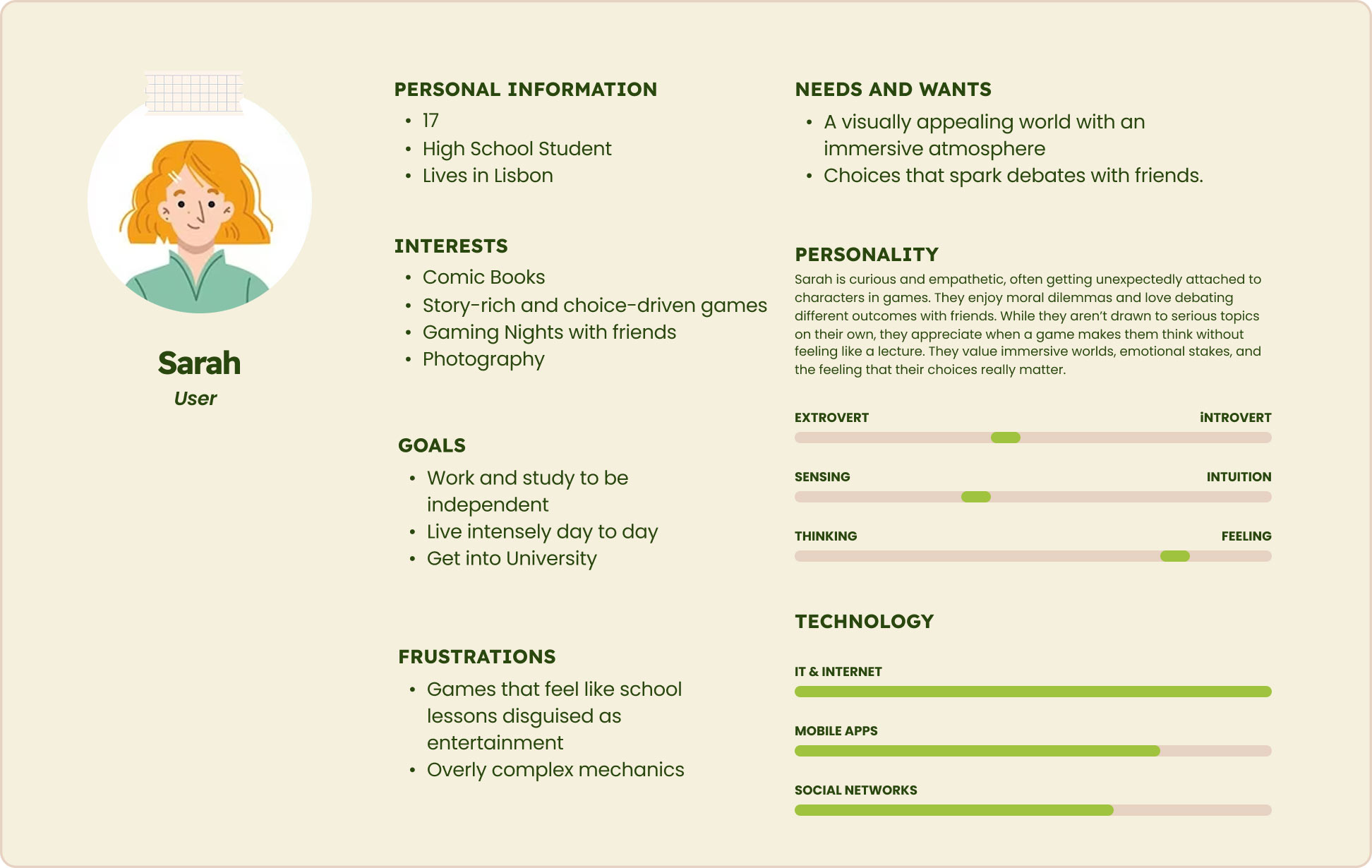
Based on the proto-persona and the overall idea, the main objective was defined still focused on the goals of the project. The main objective is to create a sense of responsibility and decision-making, as the player can only save five out of eight endangered animals. This limitation would force players to think carefully about their choices, creating a metaphor for inequality in conservation efforts.
It was also decided to highlight the importance of collective action, emphasizing that saving these species often requires more than just individual effort. A narrative was developed following this idea, where a laboratory has limited space to care for the rescued animals.
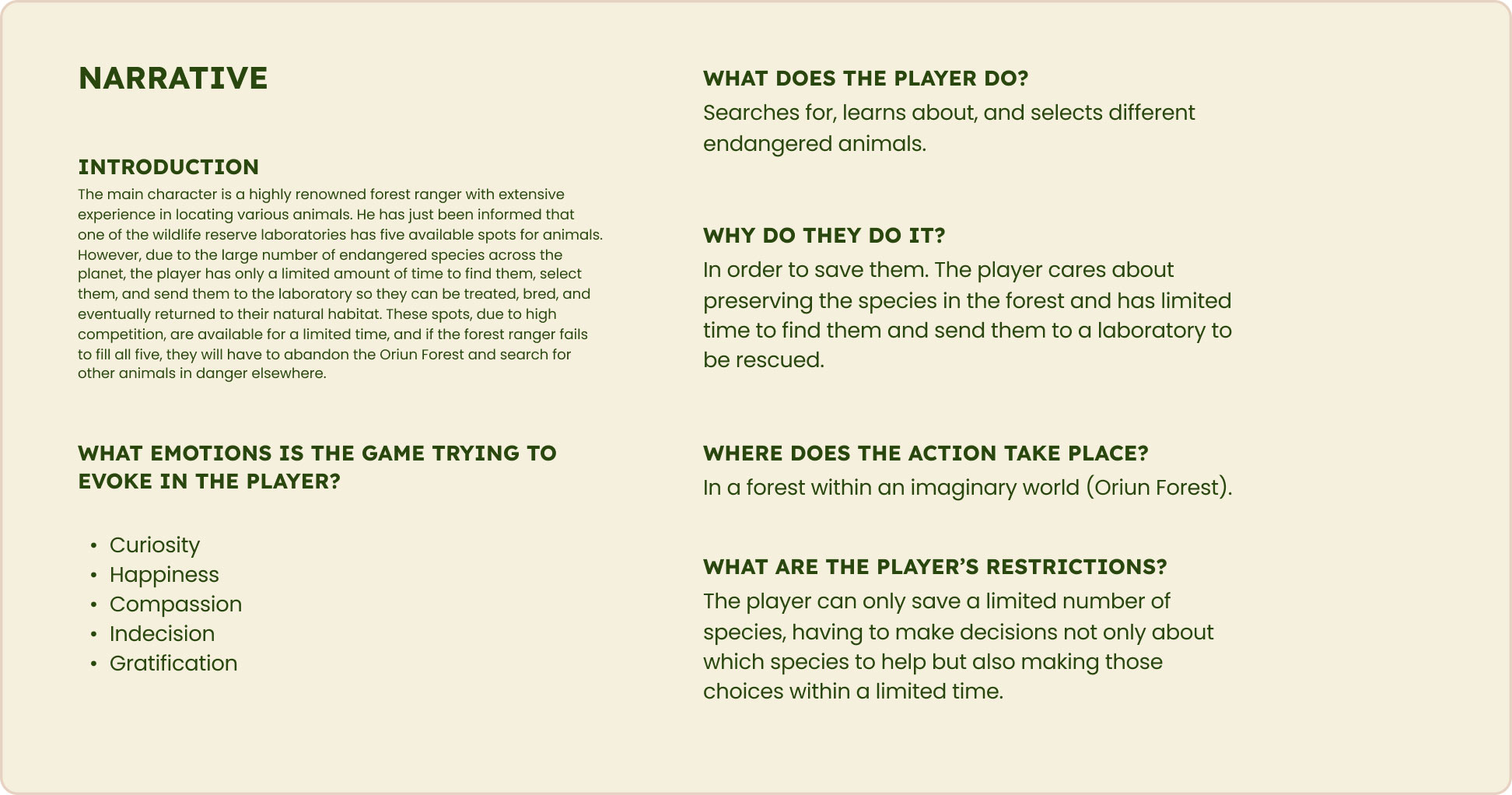
Based on the proto-persona and the overall idea, the main objective was defined still focused on the goals of the project. The main objective is to create a sense of responsibility and decision-making, as the player can only save five out of eight endangered animals. This limitation would force players to think carefully about their choices, creating a metaphor for inequality in conservation efforts.
With this in mind, a sketch was created to refine the game's UI, icons, interactions, and map layout.
The title S.O.S. – Save Our Species was inspired by the universal distress signal "S.O.S.," symbolizing urgency and crisis—conditions that reflect the situation of the animals within the game. The acronym was reimagined to stand for "Save Our Species," aligning the title with both the gameplay and the broader environmental message.
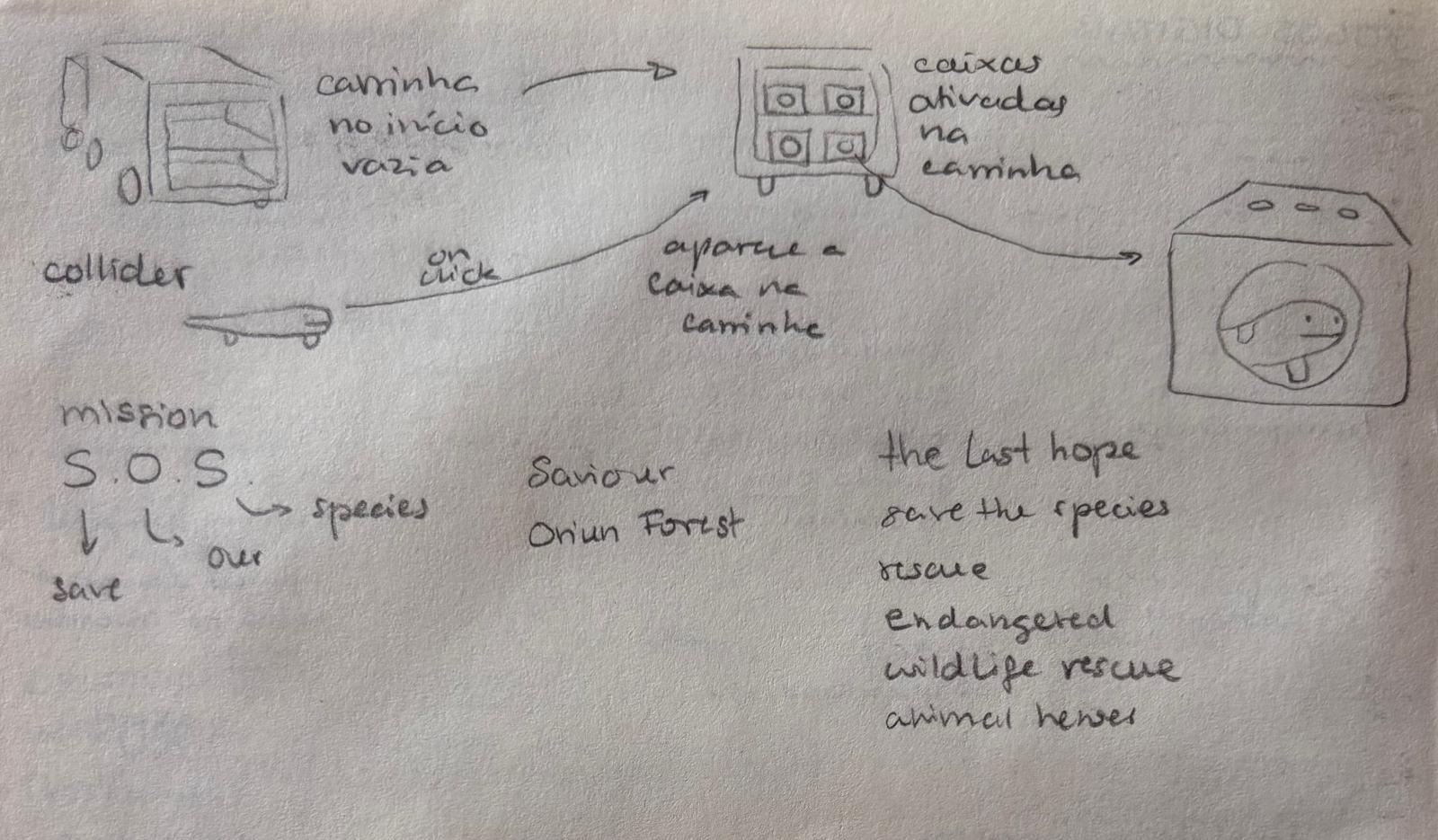
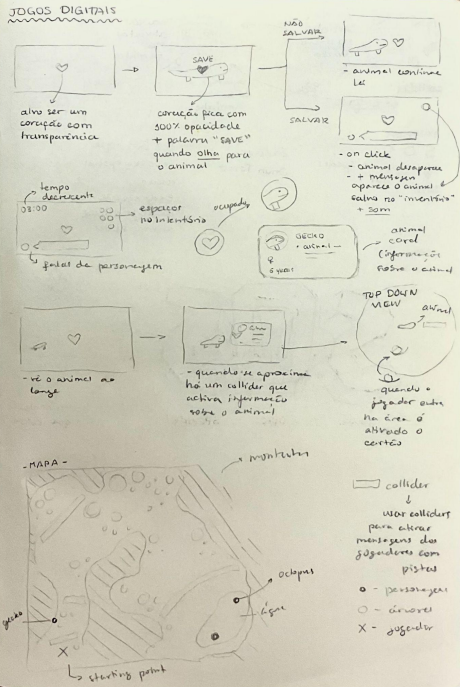
Game concept sketches (icons, map, gameplay, feedback, etc.)
Key Outcomes:
Comprehensive visual and structural guide to map out the in game interactions and overall layout.
2. Prototyping
The game was developed using Unity, utilizing the scripts provided by the professor, as previously mentioned. It was decided early in development that the game would adopt a low-poly art style to maintain visual consistency. Due to time constraints, the game was built using a variety of free assets sourced from the Unity Asset Store and PolyPizza.
While the assets were used for the environment building and the animals, the UI components were custom-designed using Adobe Illustrator. Each animal has its own card featuring a custom story and specific details designed to aid the player in making their decision.
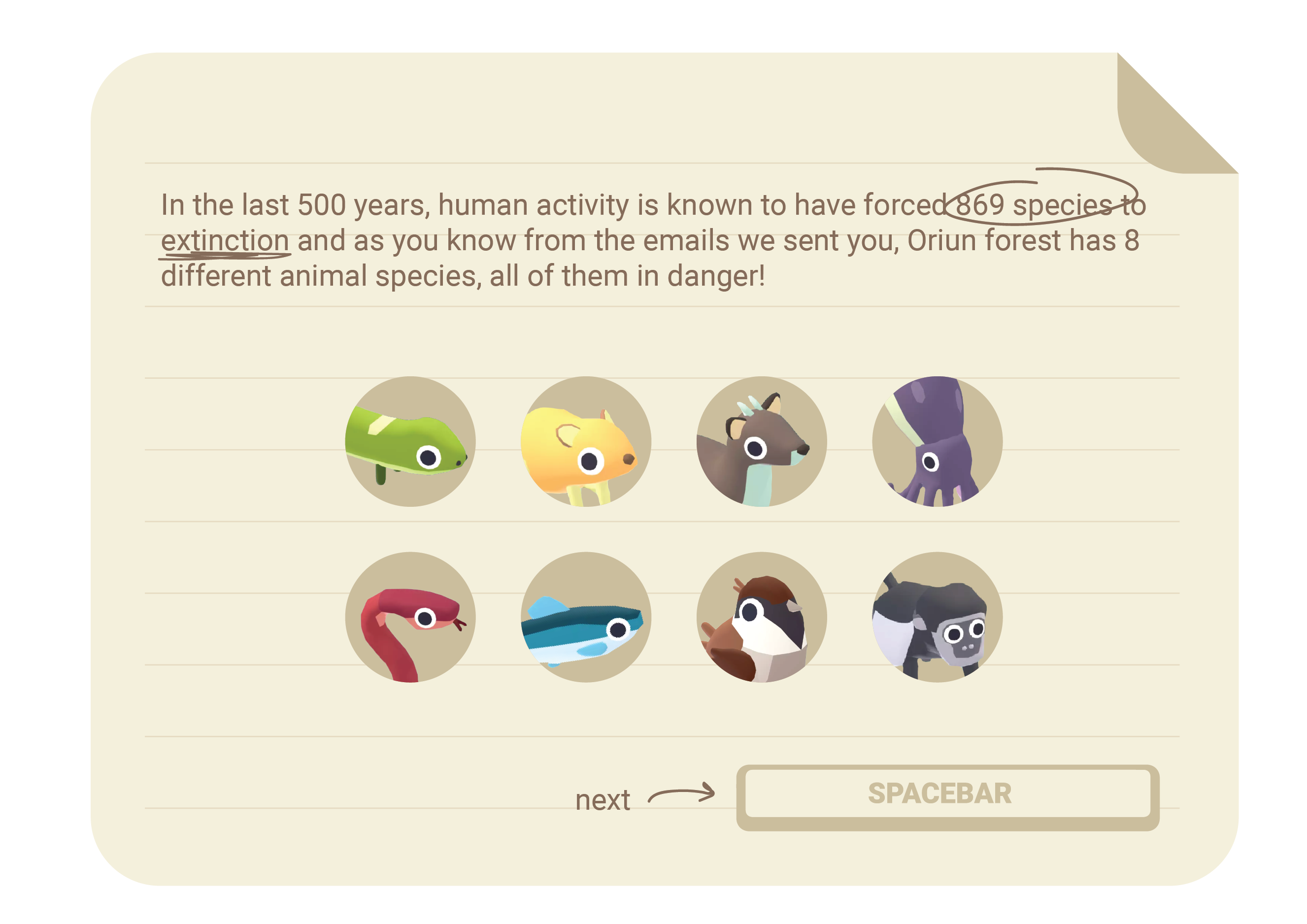
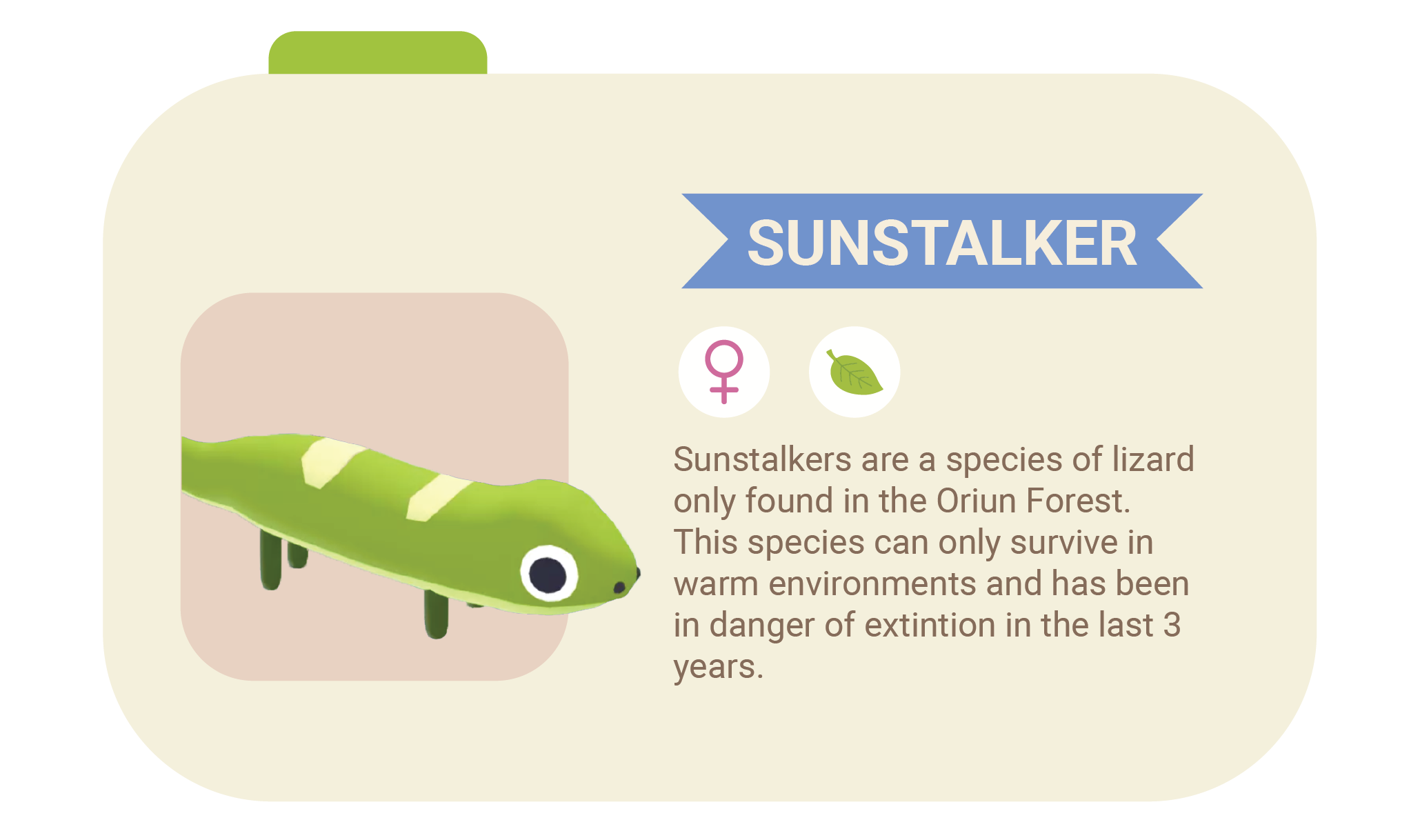
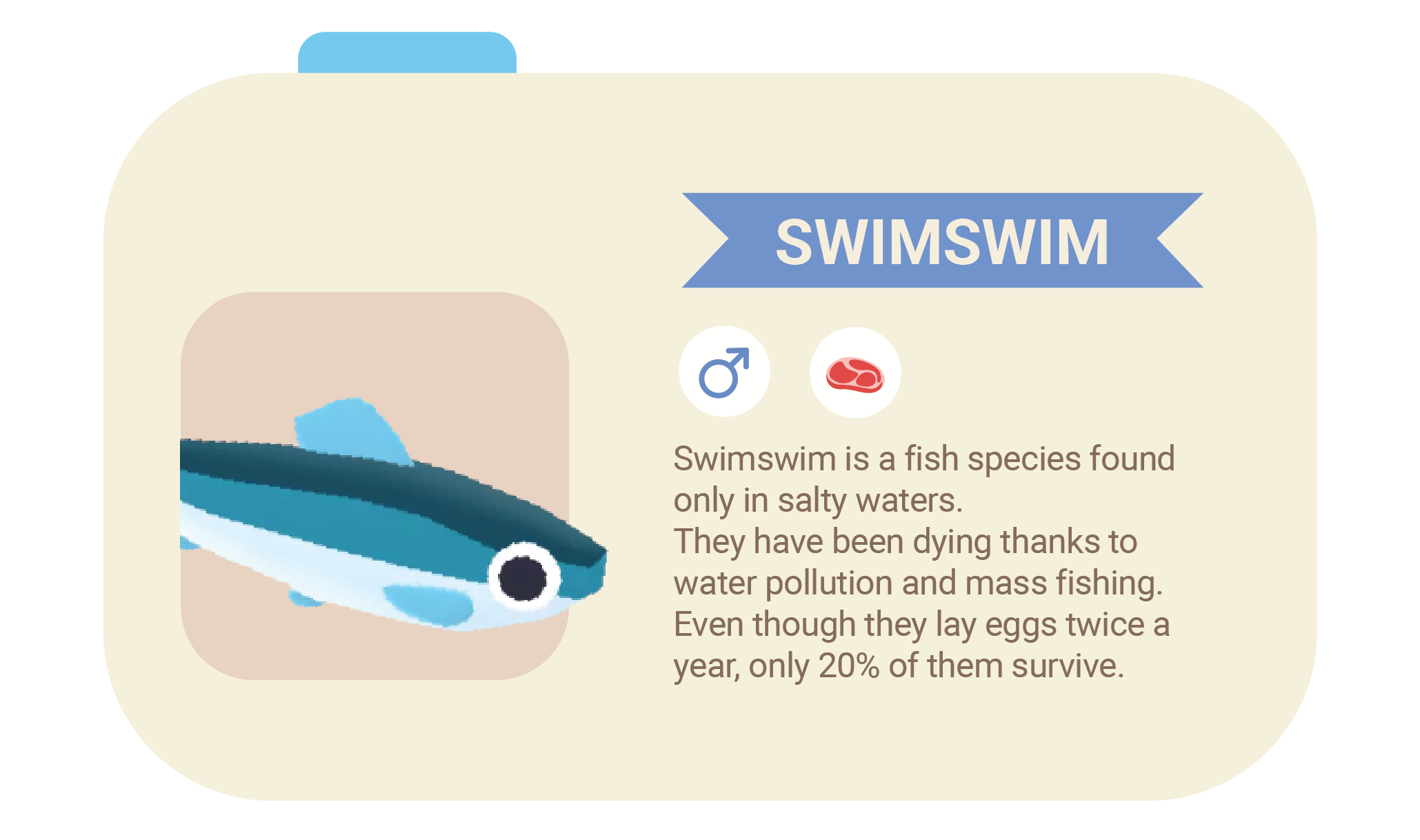
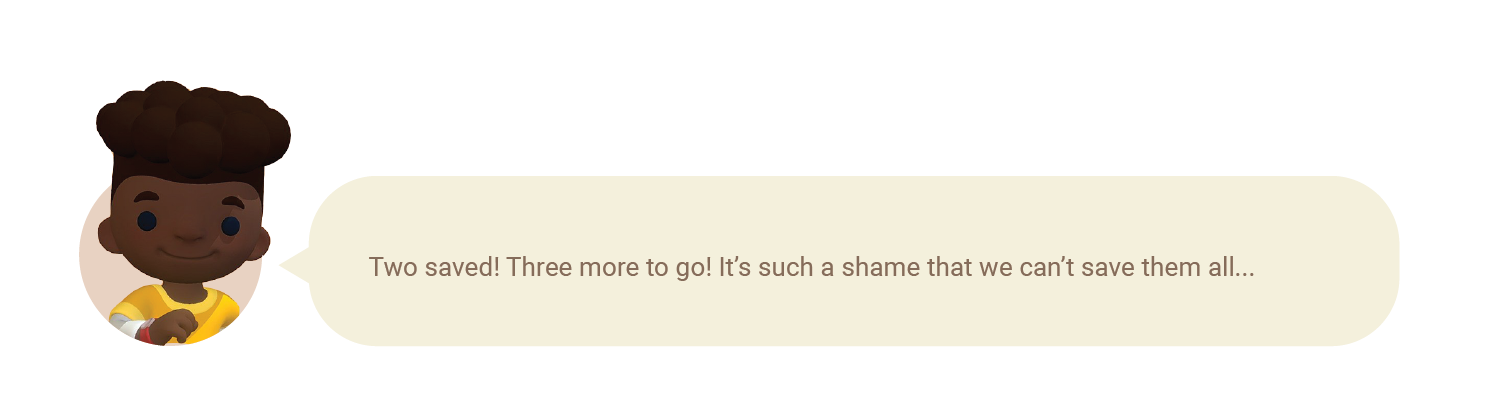

UI assets examples
Various types of triggers were implemented, including "look at" (in/out), button presses, and physical colliders. Post-processing effects were used to create an underwater visual effect, which is activated through a collider.
Additional scripts were implemented to manage a countdown timer during gameplay, as well as to control the initial and final scenes.
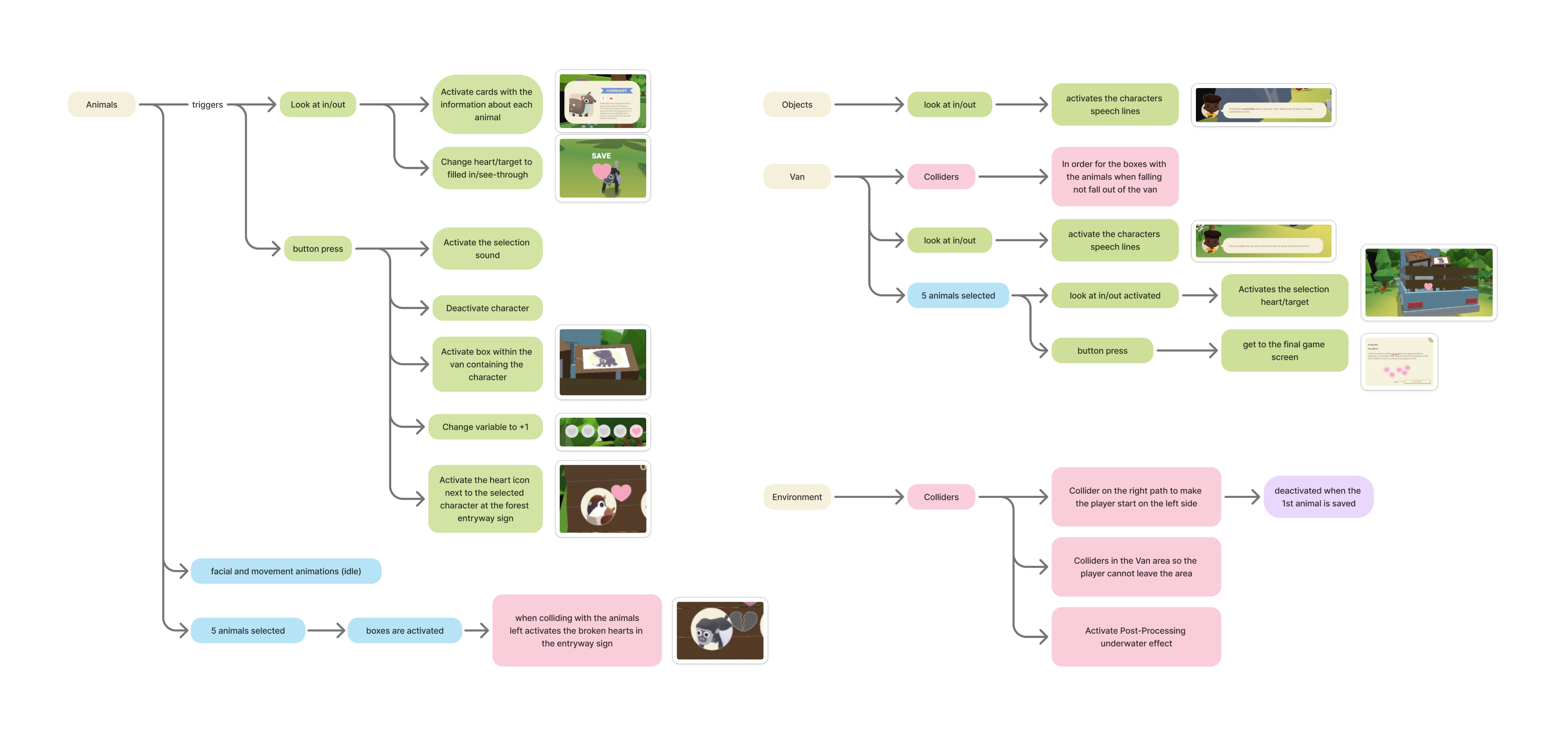
Triggers and colliders
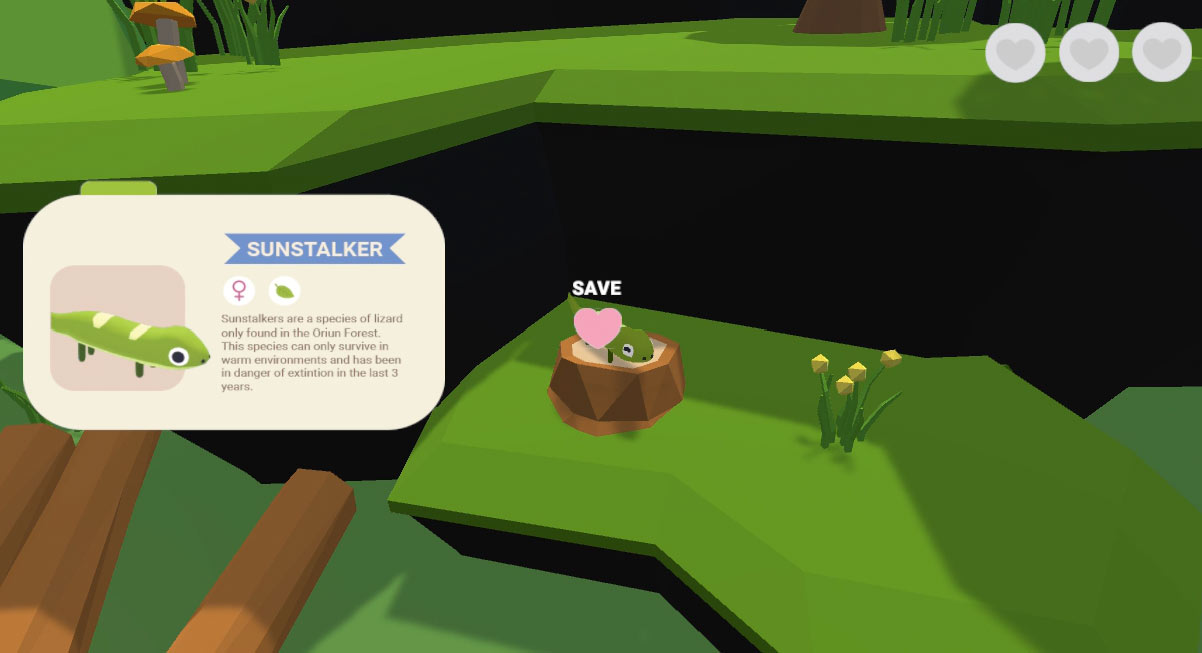
Gameplay video (click to play)
Key Insights:
High-Fidelity Prototype Development: Created a functional prototype version of the final game.
4. Evaluation / Testing and Validation
Upon completing the interactive experience, a protocol was established to evaluate both the gameplay and system usability using the System Usability Scale (SUS) and the Game Experience Questionnaire (GEQ).
The evaluation involved a sample of four participants, and the results were generally positive. The SUS score achieved was 89.4, well above the benchmark of 68, indicating a high level of usability and user satisfaction.
Takeaways
This project significantly enhanced my skills in using Unity and taught me how to build a game from the ground up with a first-person perspective. It also provided valuable experience in conducting user testing to evaluate and refine gameplay.