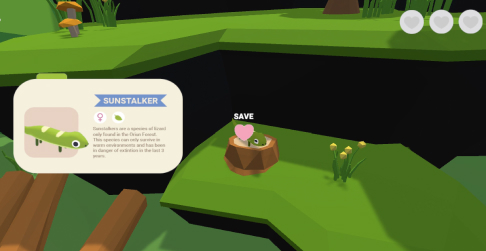
An interactive installation that invites visitors to engage with an often-overlooked sense — smell. The installation encourages exploration by placing visitors in the role of "pollinators," allowing them to create and transform various olfactory environments based on their choices and paths.
Beyond highlighting the richness of the olfactory sense, the project also aims to foster a deeper appreciation for the environment and the complex work done by bees in shaping fragrant natural spaces.
Context
This project was developed for the Interaction Design I course and began as a group exploration of a specific area in Lisbon, Martim Moniz, known for its rich and diverse scents. The initial concept involved transforming a street map into an olfactory experience. From this starting point, the idea evolved into an individual project focused on the deeper exploration of the sense of smell as a central element of interaction and experience design.
Problem
In a world dominated by visual and auditory stimuli, the sense of smell is frequently undervalued in daily life. Despite its strong connection to memory, emotion, and perception, smell is often overshadowed by the visual sense, as highlighted by neuroscientist Jessica Freiherr. This imbalance raises questions about how our olfactory experiences are perceived, processed, and prioritized.
What happens when smells are deconstructed, manipulated, or combined in new ways? How might scent function as a medium of interaction, communication, or even collective experience? The challenge lies in rethinking the role of smell in contemporary sensory culture and confronting its marginalization in favor of sight and sound.
Goal
Create an interactive installation that reawakens the sense of smell by engaging visitors as active participants in olfactory exploration. Have the participants navigating and manipulating evolving scent environments, fostering shared experiences and encouraging collective interaction. The main aim is to place smell at the center of an immersive, participatory encounter that builds connection and community through a dynamic sensory exchange.
Constraints
Unpredictability of Scent Perception: Smell is a highly subjective and variable sense, influenced by individual sensitivity, memory, and cultural background, making it difficult to design a consistent experience for all users.
Control and Containment of Scents: Unlike visuals or sounds, scents are hard to control spatially and temporally — they disperse, linger, and can mix unintentionally, affecting the clarity of the experience.
Technical Limitations: Delivering, isolating, and switching between different scents in a reliable and repeatable way requires specialized equipment and may involve complex engineering.
Limited Familiarity with Olfactory Interaction Design: Since scent-based interaction is less explored in design practice, there may be a lack of established methodologies or precedents to draw from, increasing experimentation time.
Design Process
1. Ideation Phase
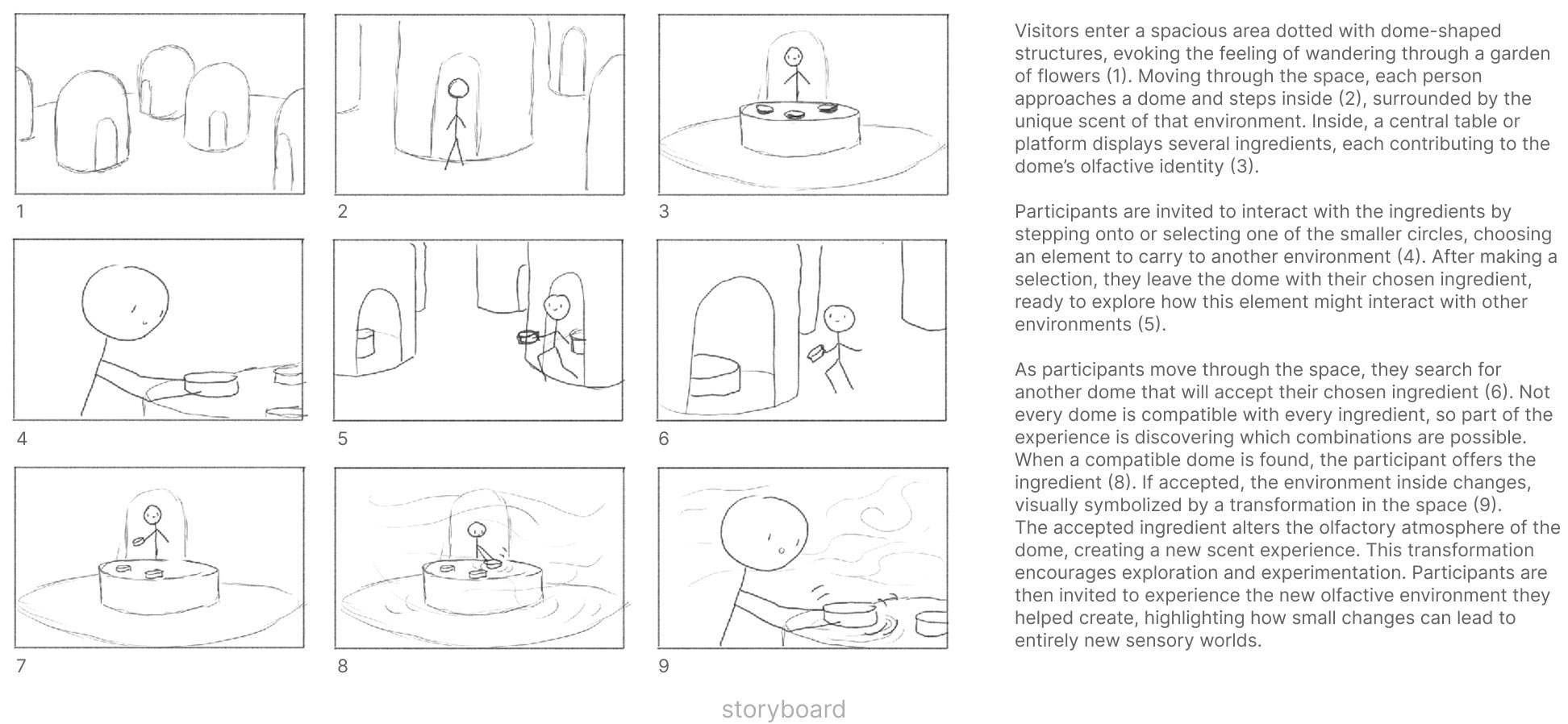
In the initial phase, the concept emerged to create an installation inspired by the dynamics of movement and transformation found in pollination. Participants would navigate through a series of interconnected spaces, carrying certain scents and transferring them to different environments. Each movement alters and reshapes the olfactory landscape, creating an evolving sensory experience.
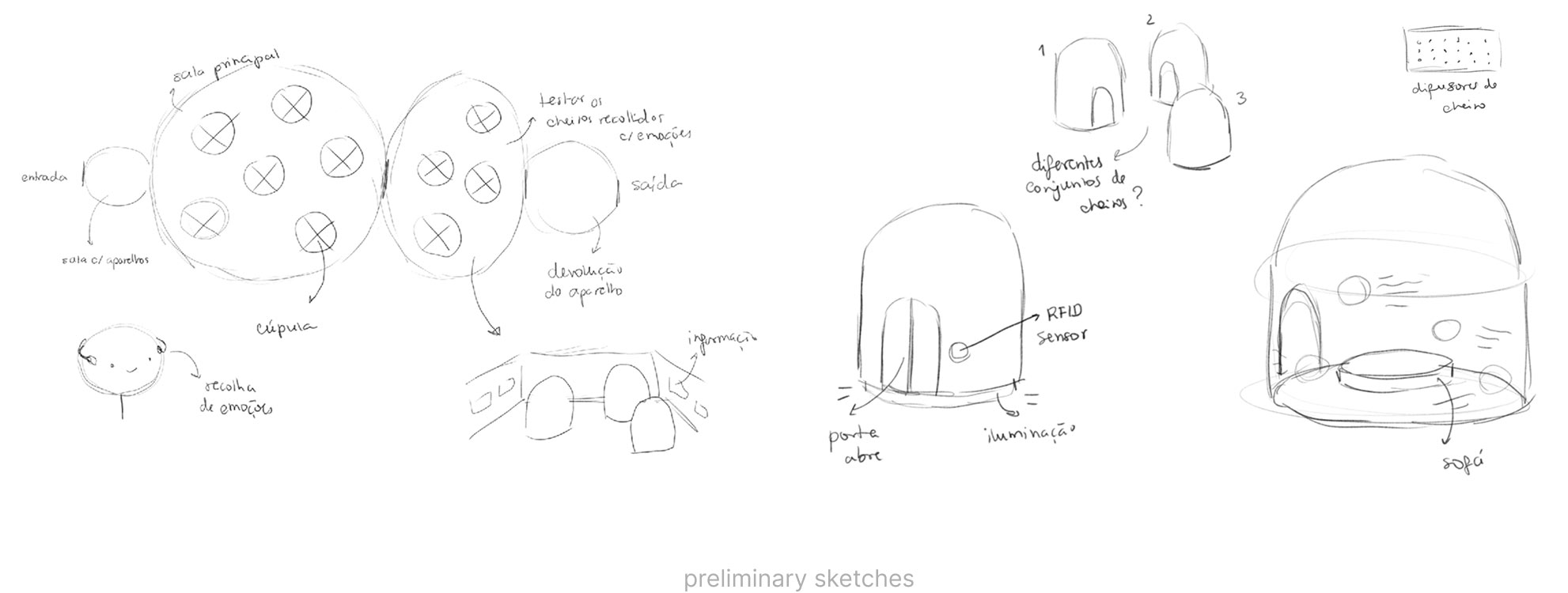
To visualize the overall experience, not only sketches but also a storyboard was developed with a detailed description of the interactions within the installation. While there is no fixed path, the installation encourages exploration and discovery, allowing each participant to experiment freely and uncover connections between scents at their own pace.
2. Prototyping
Once the concept was defined through sketches, the inclusion of a pre-show was deemed essential to introduce the public to the installation's experience and set the stage for interaction. Building on this, user flow maps and visual representations of key installation elements were developed to refine and communicate the interactive journey.
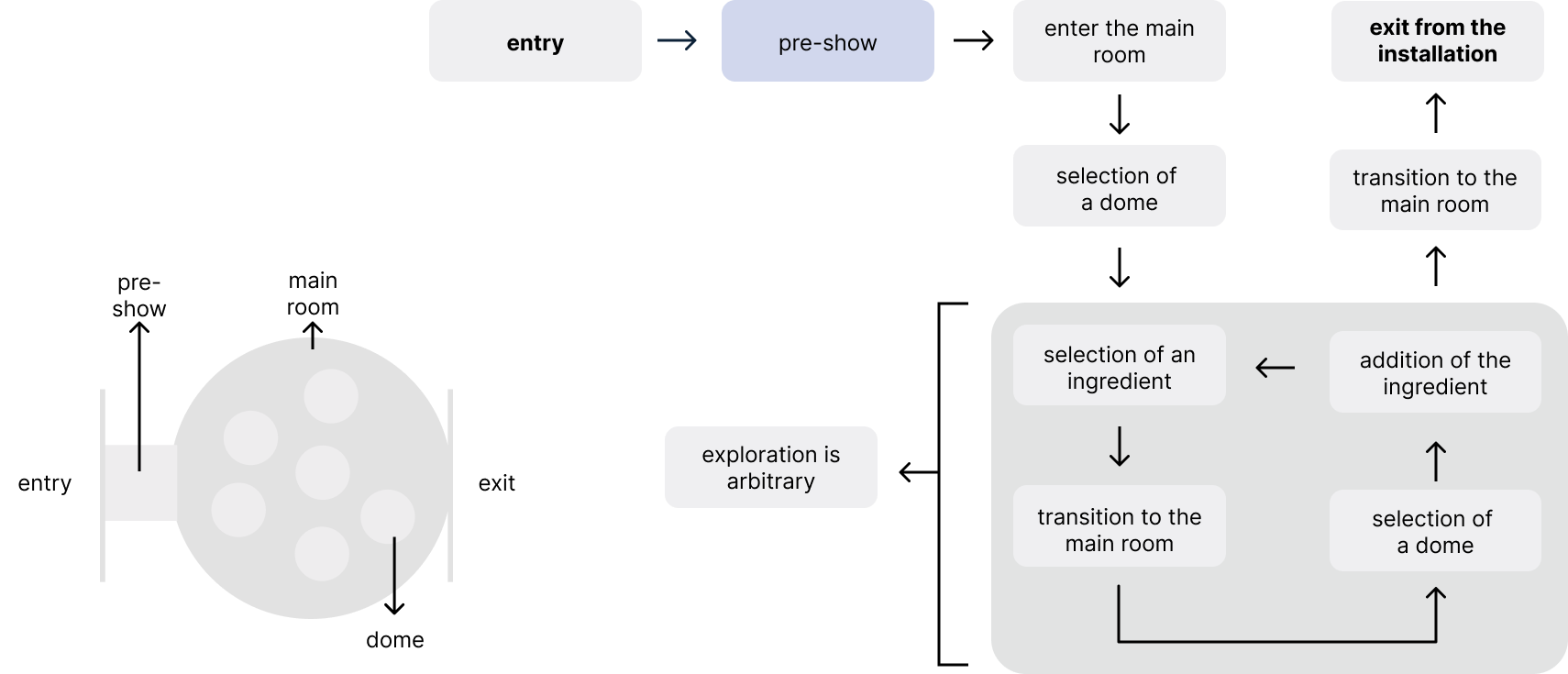
User flow
2. Prototyping
The prototype was developed with the available resources, emphasizing visual representation of how the installation would appear and operate through detailed illustrations and animations.
Comprehensive visuals were created to depict every stage of the experience, beginning with the entryway and the pre-show sequence. To complement this, a carefully crafted script for the pre-show was created offering visitors a concise tutorial on how to engage with the installation and a clear introduction to its core concept.
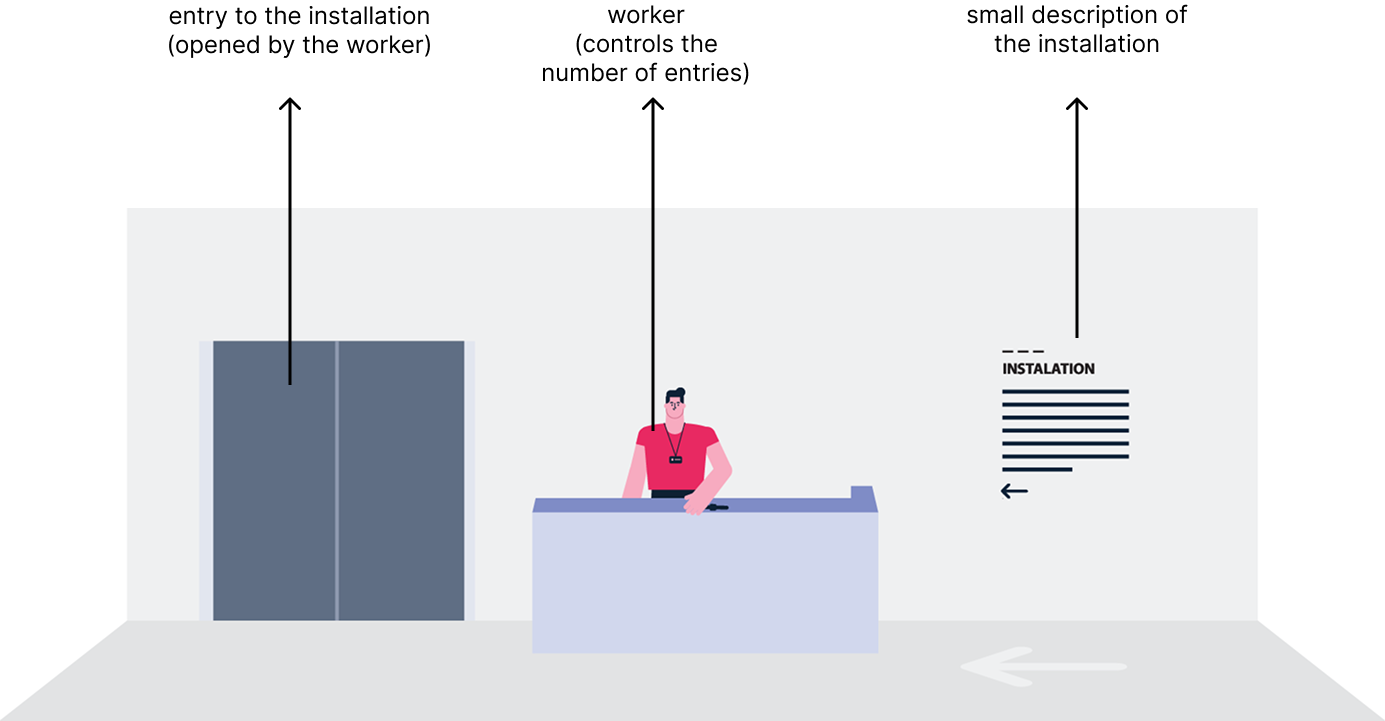
Entryway to the installation
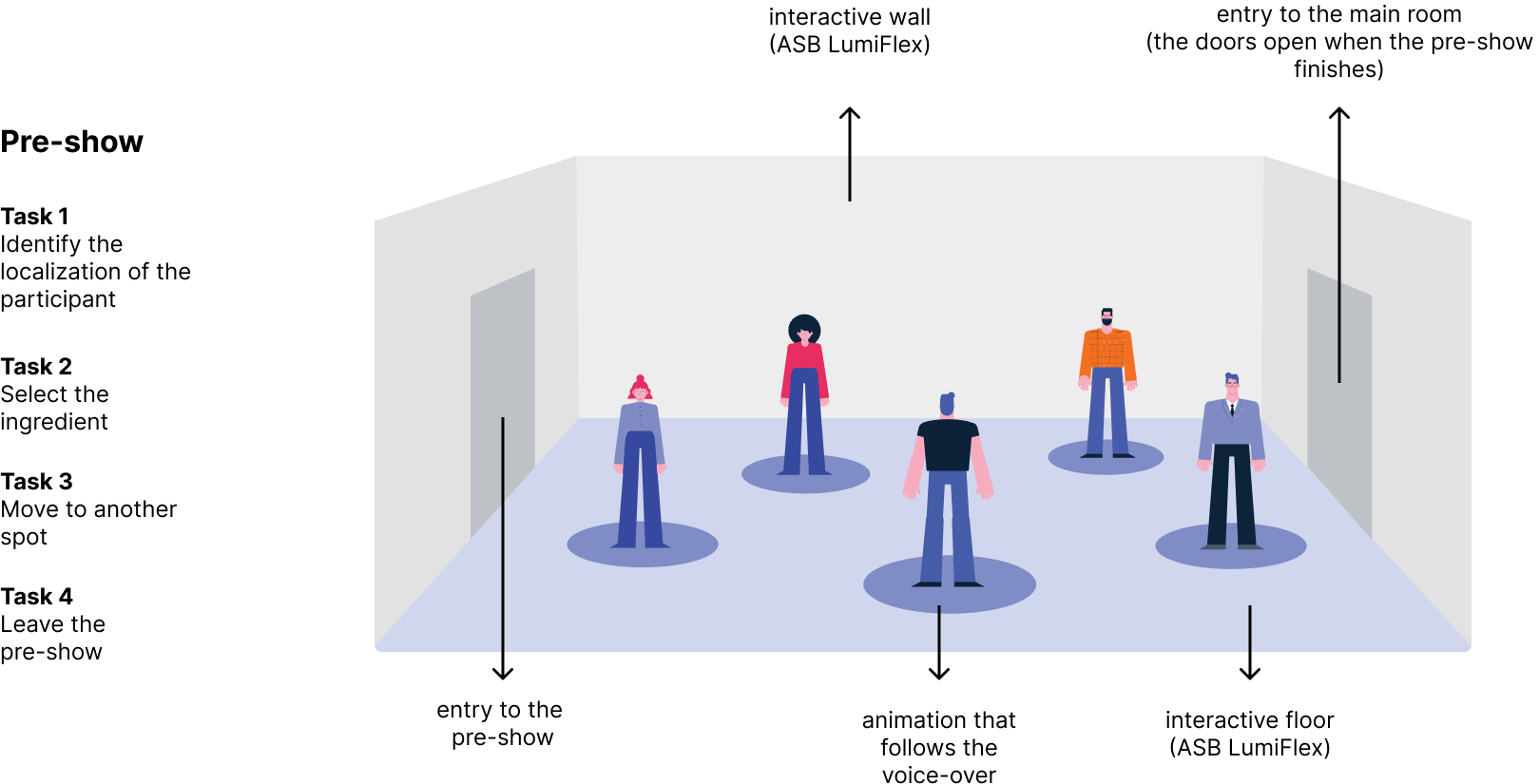
Pre-show
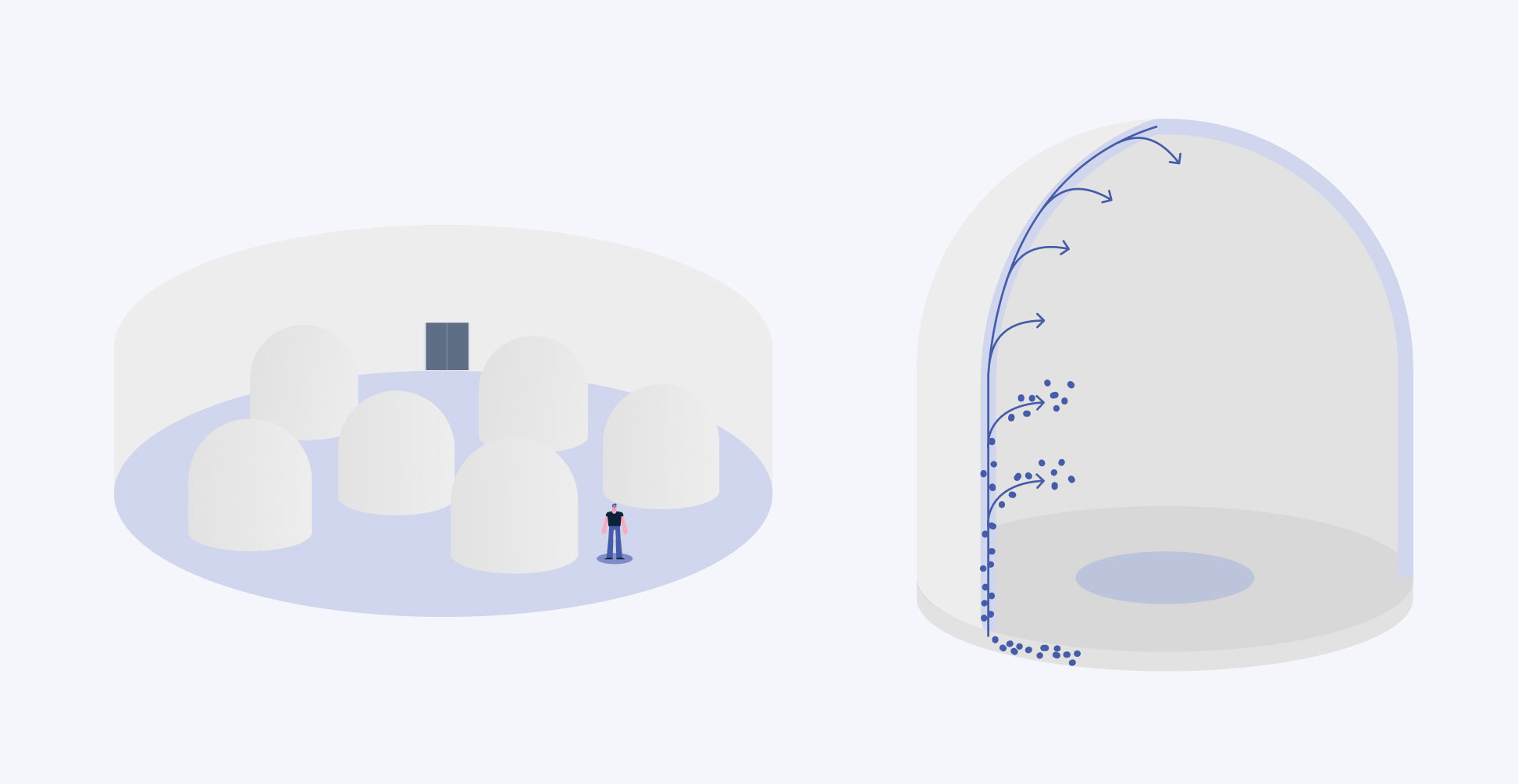
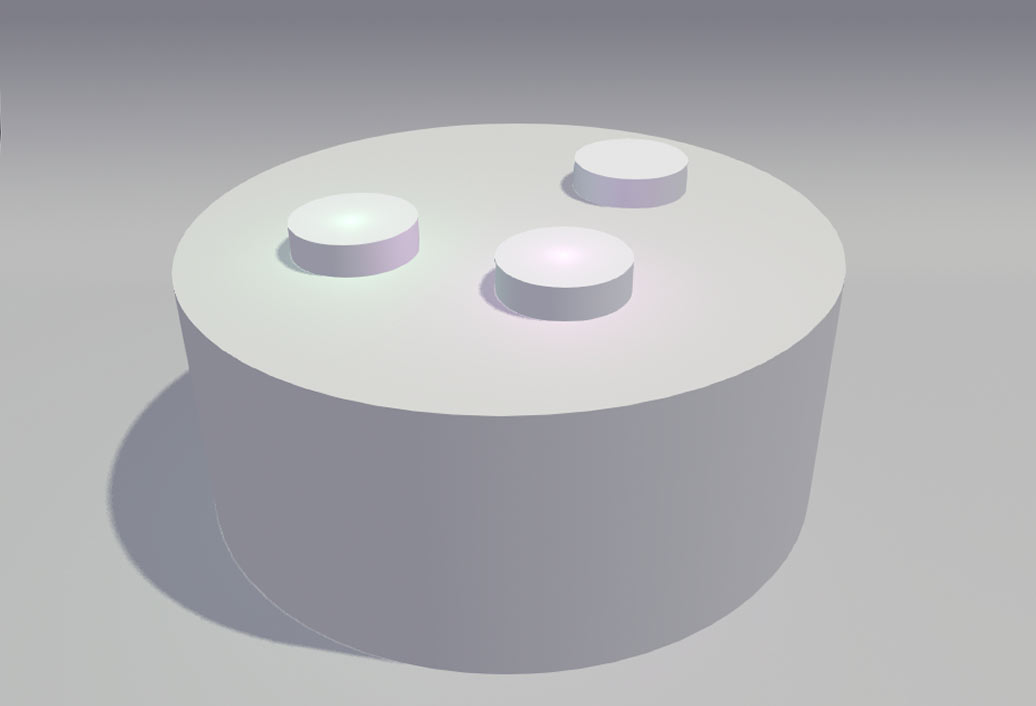
The main room was designed around the structure of a garden, where each dome represents a flower with its own distinct scent that can be altered through exploration and the transfer of aromas.
The concept envisions an interactive floor that visually responds to visitors' actions, displaying animations beneath their feet to indicate when a scent is being transported.
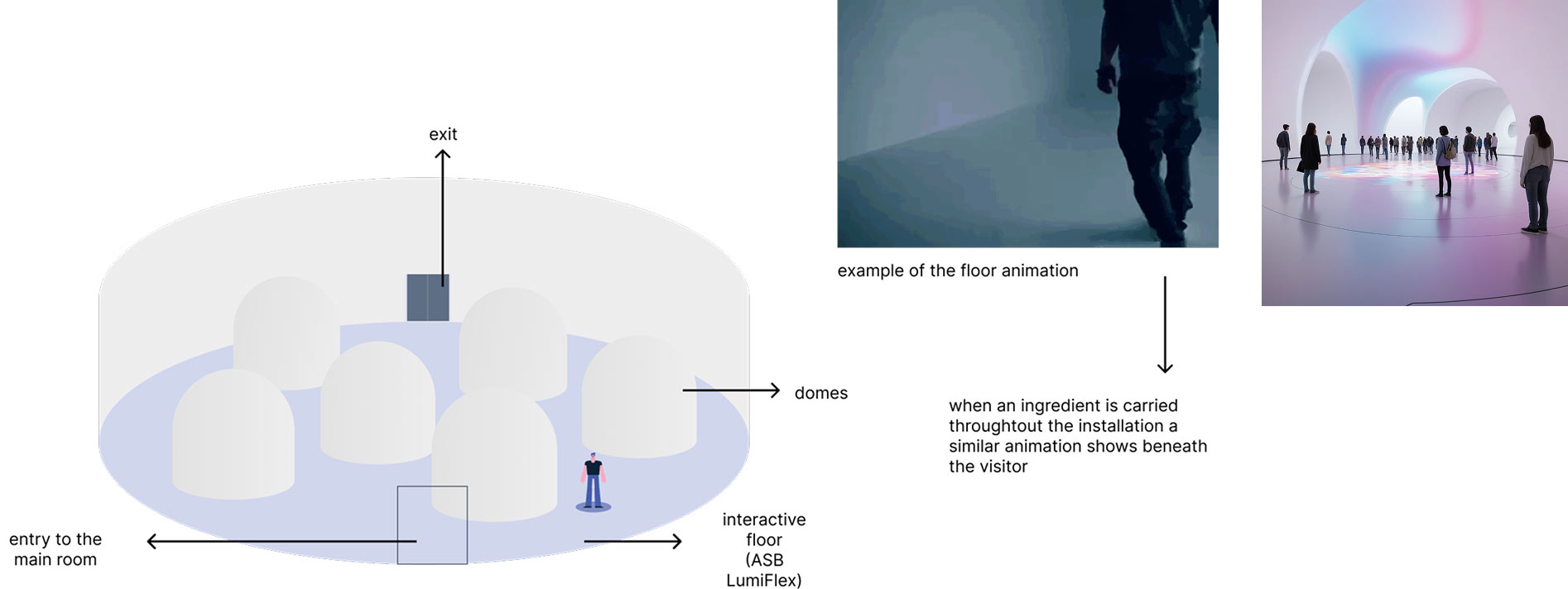
Main room
The dome became one of the most intricate and essential components of the installation, serving as the key element that enables visitors to sense their influence on the surrounding olfactory environment. To ensure this interaction felt tangible, the design required effective airflow and ventilation.
Given the inherent ambiguity of scent, a complementary visual layer was introduced to reinforce the experience: a dynamic, colorful animated environment inside the dome that shifts in response to changes in its scent composition, visually representing the addition or removal of ingredients.
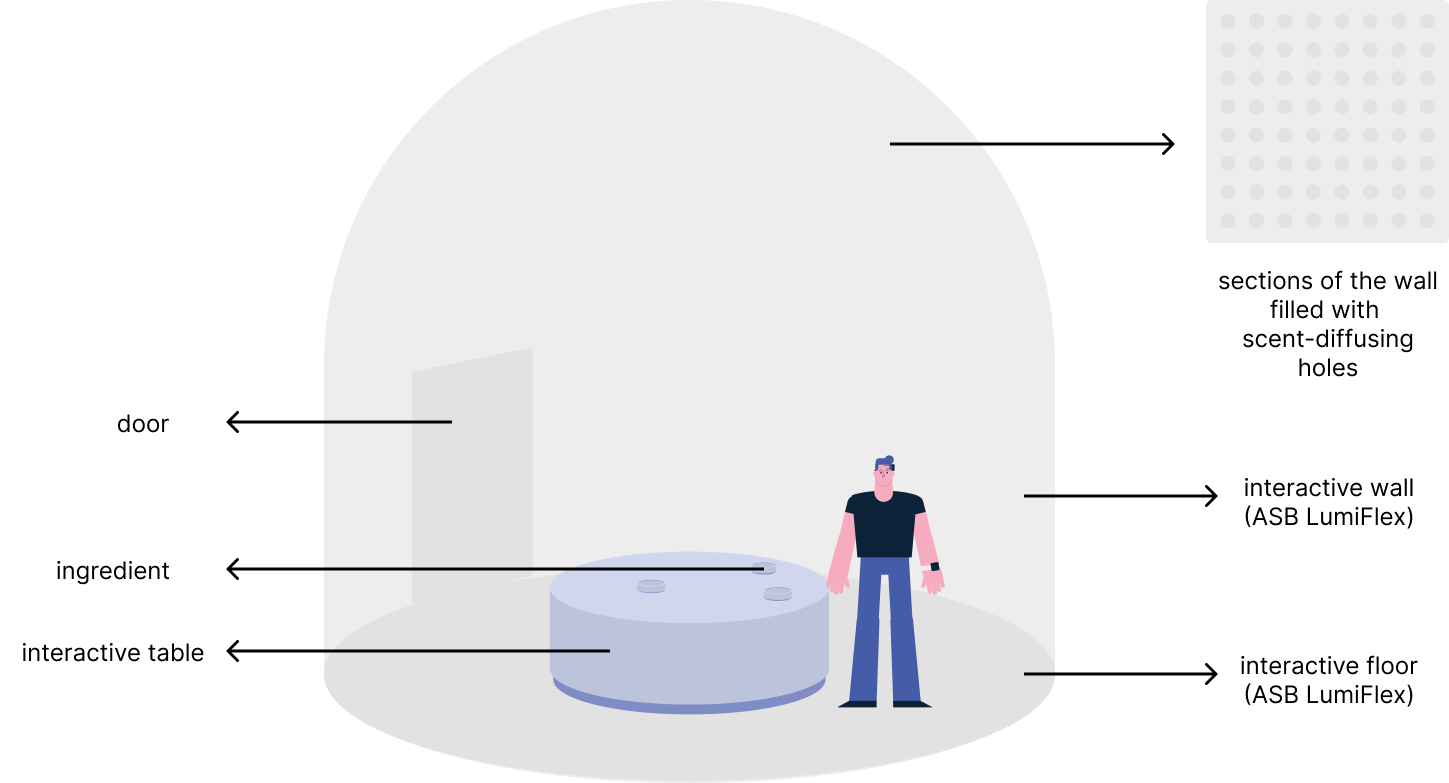
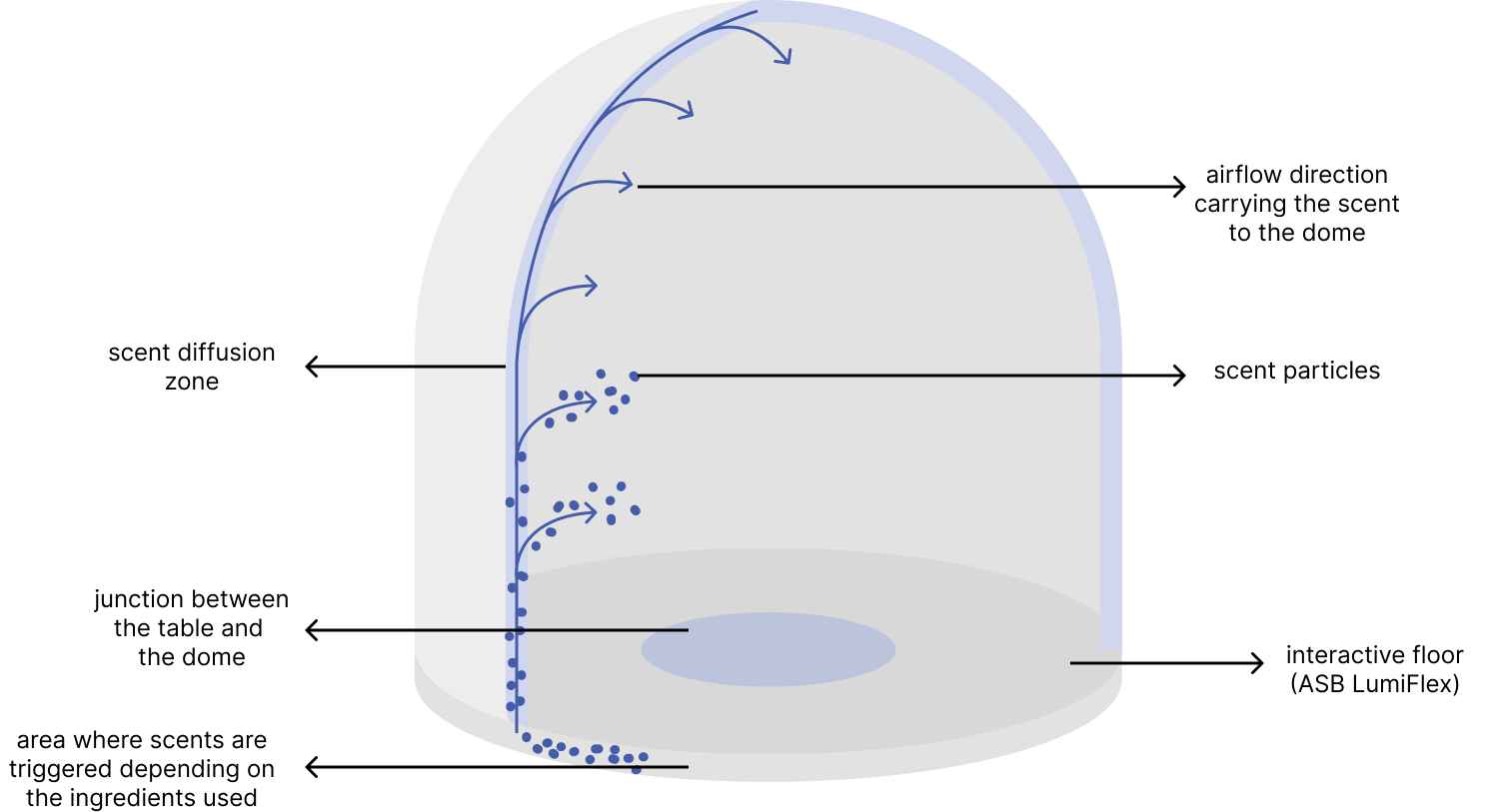
Dome composition and technology
To clarify how interaction with the scents would function, it was necessary to define the objects representing the ingredients that could be moved within the installation.
The inputs and outputs were mapped to establish how the movement of these ingredients through the space would technically influence the environment, triggering both visual and olfactory feedback.
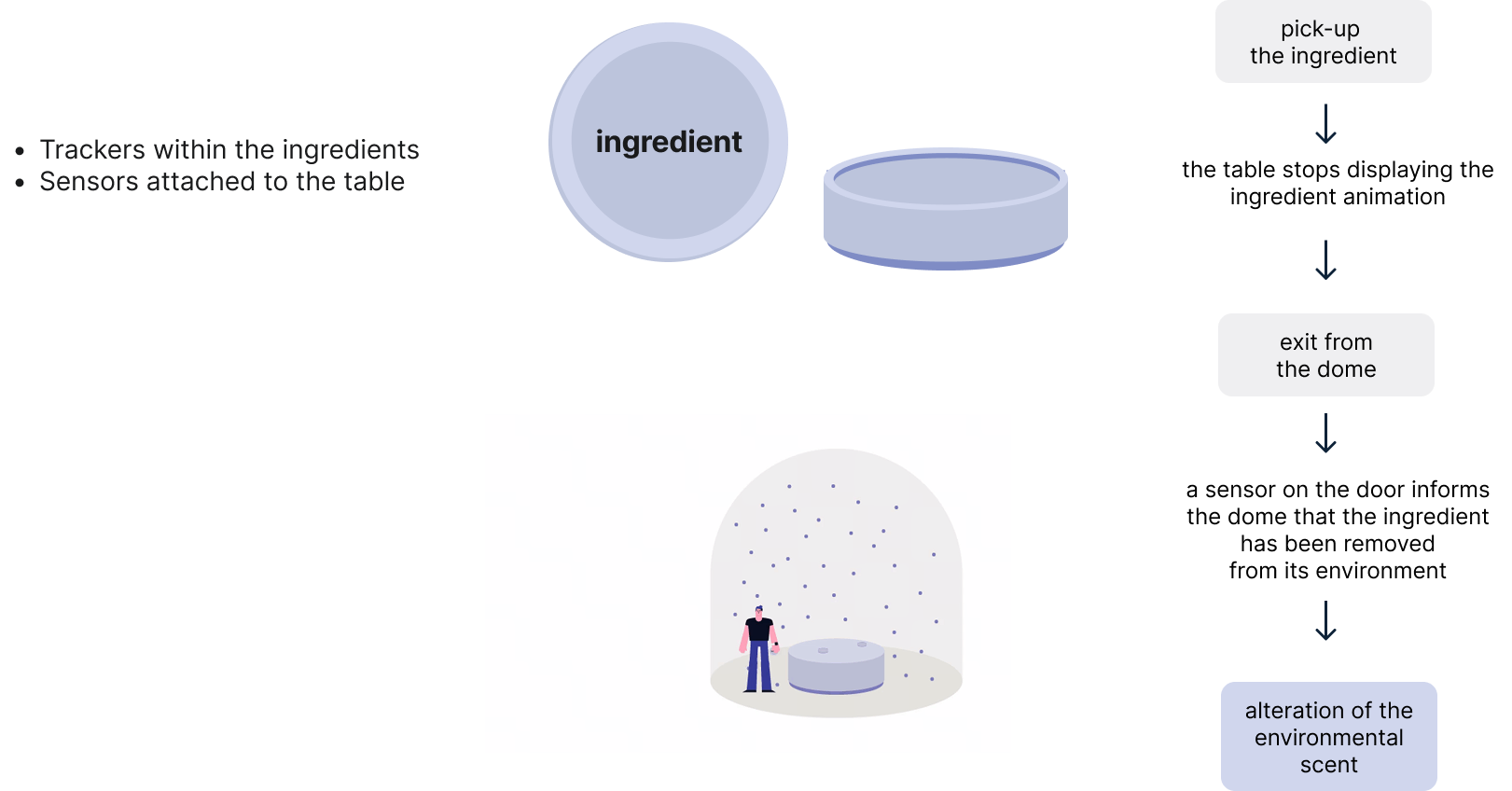
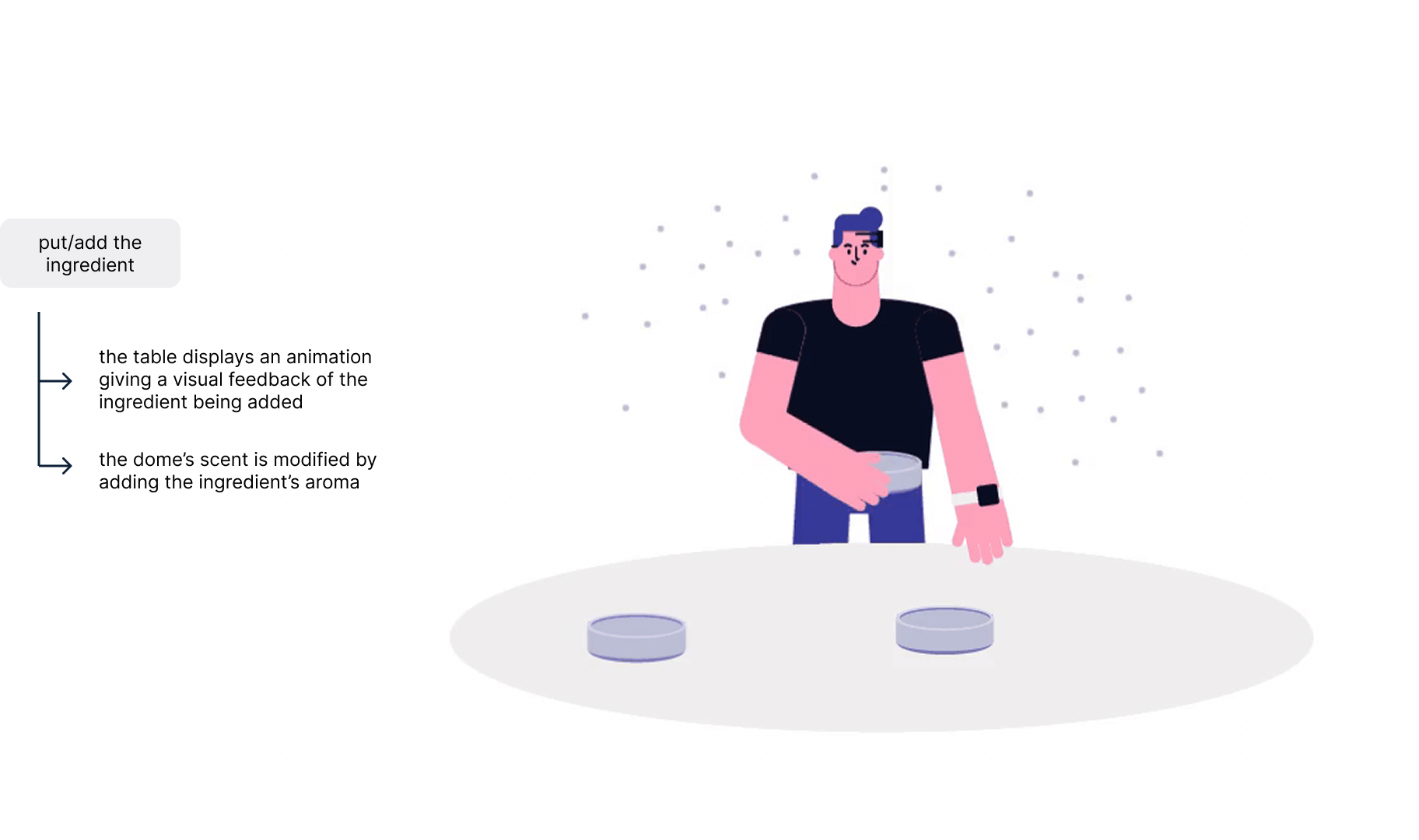
Interaction of ingredients with the environment
To gain a clearer understanding of the installation's interaction, a simple prototype was developed in Figma.
This provided deeper insight into how the experience would unfold from a first-person perspective.
Key Outcomes:
- Concept Visualization: Clear visualization of the installation through illustrations, animations, and prototype.
- Multi-Sensory Integration: Visual cues were incorporated to complement and enhance scent-based interactions.
- Interaction Mechanics: Ingredient movement and feedback systems were outlined for future development.
Takeaways
Working on this project provided valuable insights into the challenges and opportunities of using smell as a medium in interactive design. It inspired innovative methods for representing and controlling scent, expanding beyond conventional visual and auditory frameworks to craft immersive environments. The process revealed the potential of olfactory elements to foster social interaction and collective engagement, while also deepening awareness of ecological themes connected to the natural world.
Due to the complex nature of the concept, it was not possible to fully create the installation; instead, the project strengthened skills in representing and communicating an idea through alternative methods such as visualizations, animations, and prototypes. While tangible scent testing could not be achieved due to time and resource constraints, incorporating real olfactory components in future development would be a compelling next step.