Slowmo
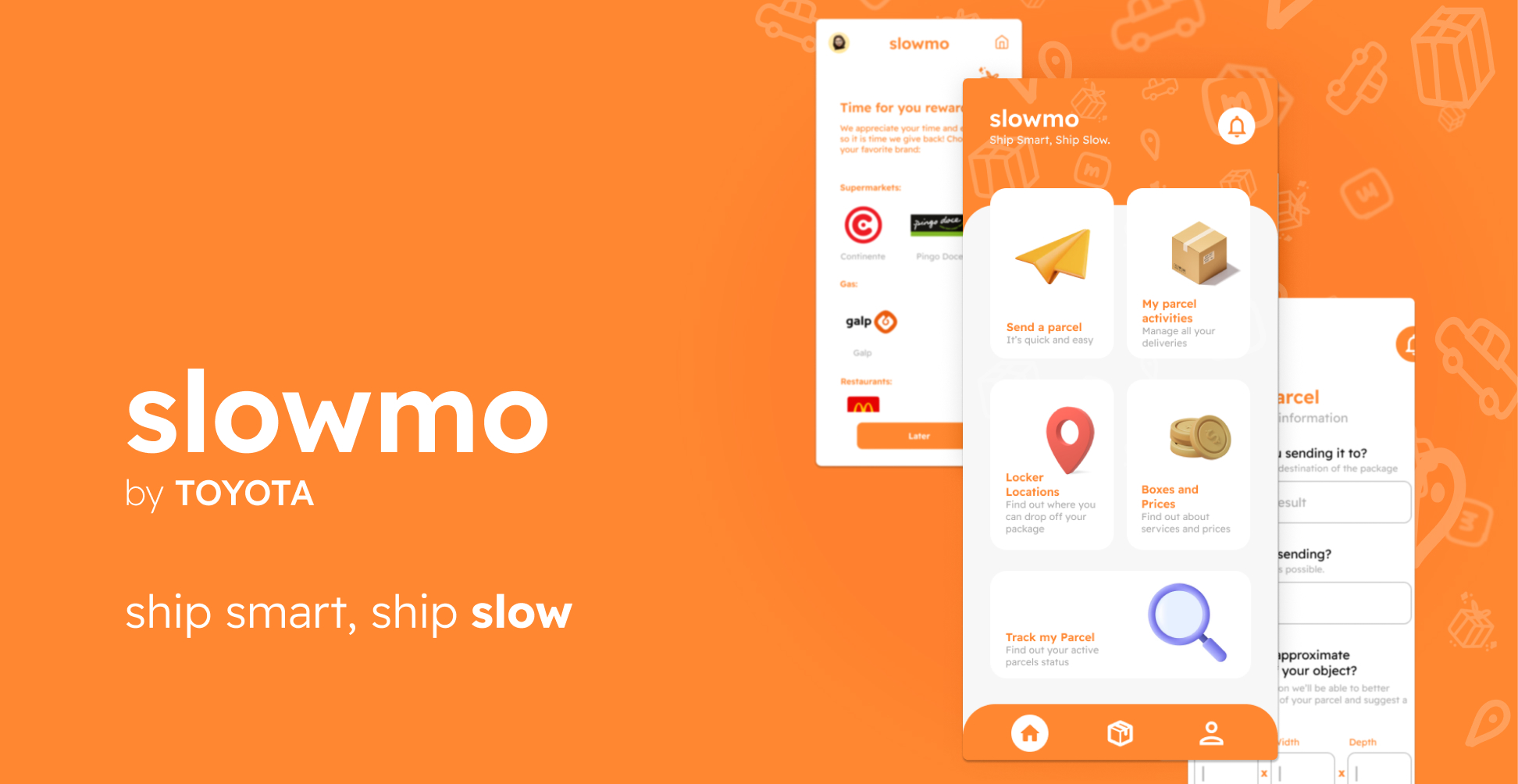
SlowMo is a concept for a more sustainable and affordable package delivery system. While modern shipping methods are efficient, they come with a high environmental cost, from fuel consumption to production impact, contributing to a significant carbon footprint.
SlowMo envisions a ground-based delivery-sharing system that integrates package transportation into the daily routines of commuters. By offering small but meaningful rewards, the system encourages individuals to carry deliveries along their regular or occasional routes.
This approach not only reduces emissions and transportation costs but also fosters a sense of community, making package delivery more eco-friendly and accessible.
Context
The project was created with the Toyota Logistics Design Competition 2024 as the final goal, following the theme "Every little bit counts", where it focuses on the fact that our planet only has one life, coming up with the challenge of promoting circular economy through logistics.
It was developed for the Design 7 course, having a special focus in the creation of a system and its subsystems, having more in depth work in those areas.
It was a Semi-finalist in the UX/UI Design Category.
Problem
Transporting goods is efficient, but it comes at a cost.
We are not talking about operating costs, but environmental costs. The reliance on several transportation methods, which consume resources, not only though the production of those vehicles but also in the fuel they burn, takes a heavy toll on the planet.
This is, of course, something that feels inevitable in today's globalised world, but we think there is a way of minimising it.
What already Exists:
- National Mailing Services (like Posten or CTT)
- International Shipping Companies (DHL, FedEx)
Goal
Create a ground-based delivery sharing system targeting environmentally conscious young people, who are either moving for university or to a new job, who want to spend as little as possible on shipping, and who do not need their goods to be delivered in good time.
Constraints
- Adhering to the official guidelines and requirements of the Toyota Competition.
- Navigating a relatively unfamiliar domain, specifically logistics, with limited prior experience.
Design Process
1. Initial Definition
In the beginning there was a need to define our main target, ending up on young adults.
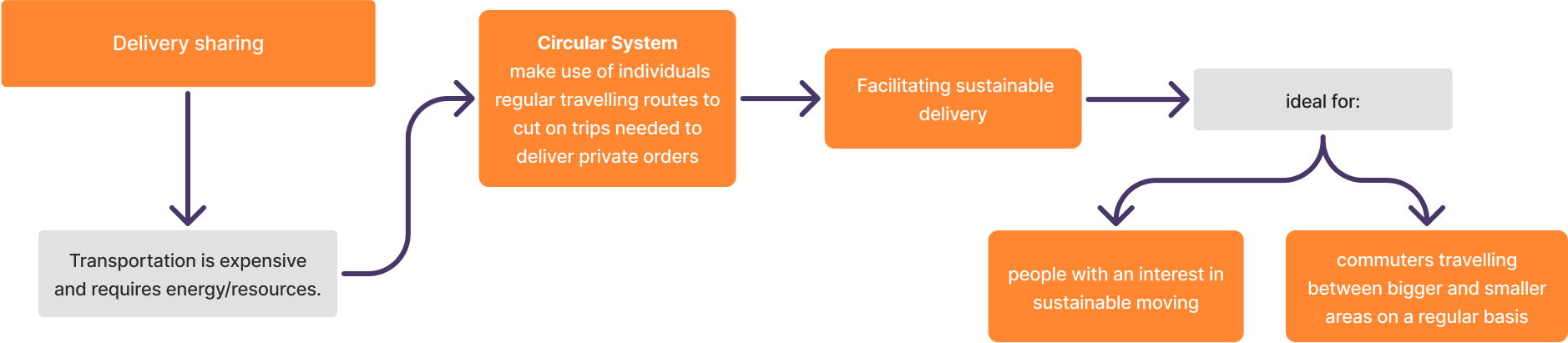
Like in the briefing, the main focus was in the creation of a sharing economy that seeks to enable young adults to ship their personal items in a cheap and sustainable way.
Key insights
2. Ideation Phase | System
During this phase, it was essential to develop a deeper understanding of how the overall system would function. The team chose to focus primarily on Portugal, as all members had greater familiarity not only with the primary target audience in this country but also with its existing shipping and logistics systems.
Slowmo would have three key elements: two distinct apps, one for the user deliverers and one for customers who need their items shipped; and a comprehensive smart locker system in which users can drop off and pick up packages.
These apps and the underlying backend would be supported by Toyota. While they could only contracted from a third-party, and placed in locations such as partner supermarkets and Toyota dealerships.
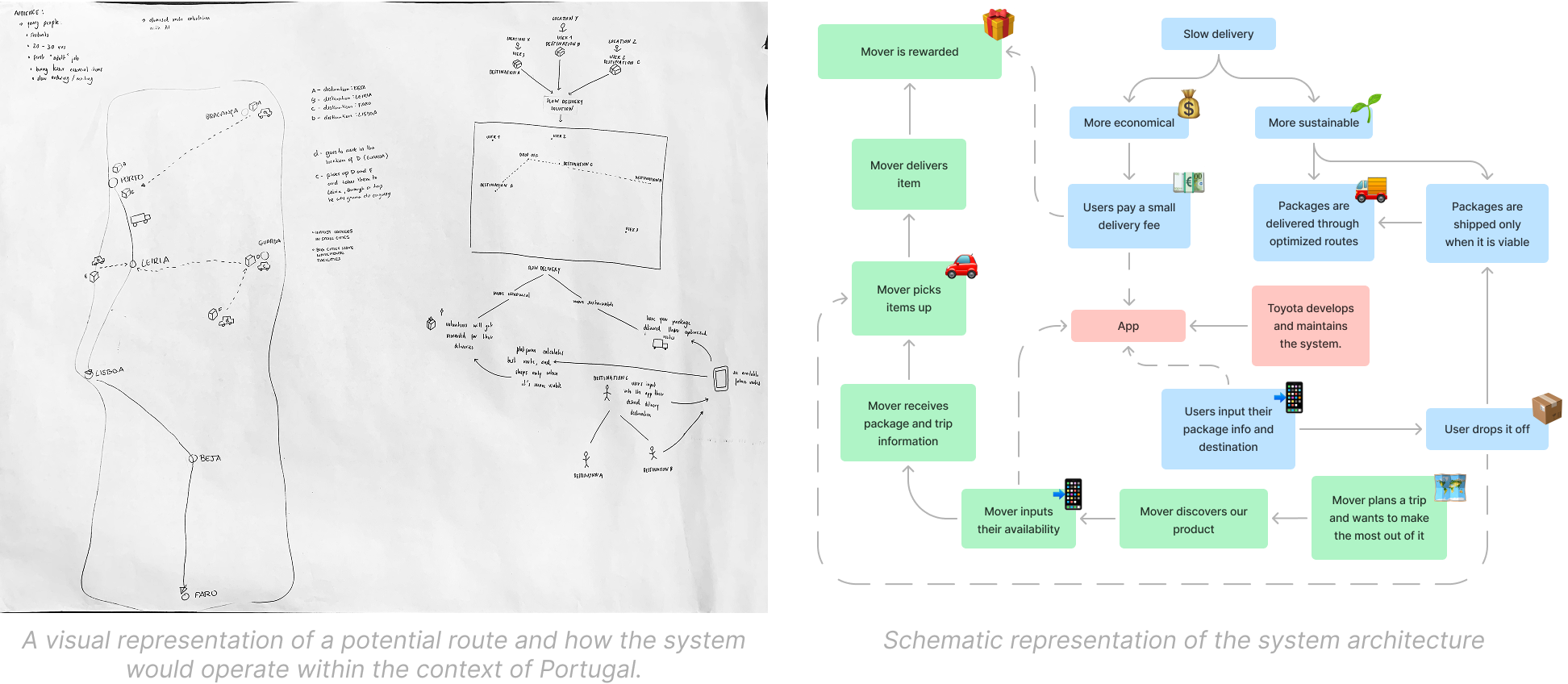
At the base of this system would be a proprietary route planning AI algorithm that could intelligently match each user deliverer to packages that could fit into their commute.
This would remove the need for consolidation and deconsolidation centers. Packages would travel from city to city, locker to locker, in the most efficient way possible, by taking into account the trips that these users are already making.
3. Ideation Phase | Sub-System (User App)
At this stage of the project, responsibilities were distributed among team members, with each assigned to a specific subsystem. My focus was leading to have initial ideological shaped.
To better understand the target a proto-persona, a scenario and a storyboard were created.
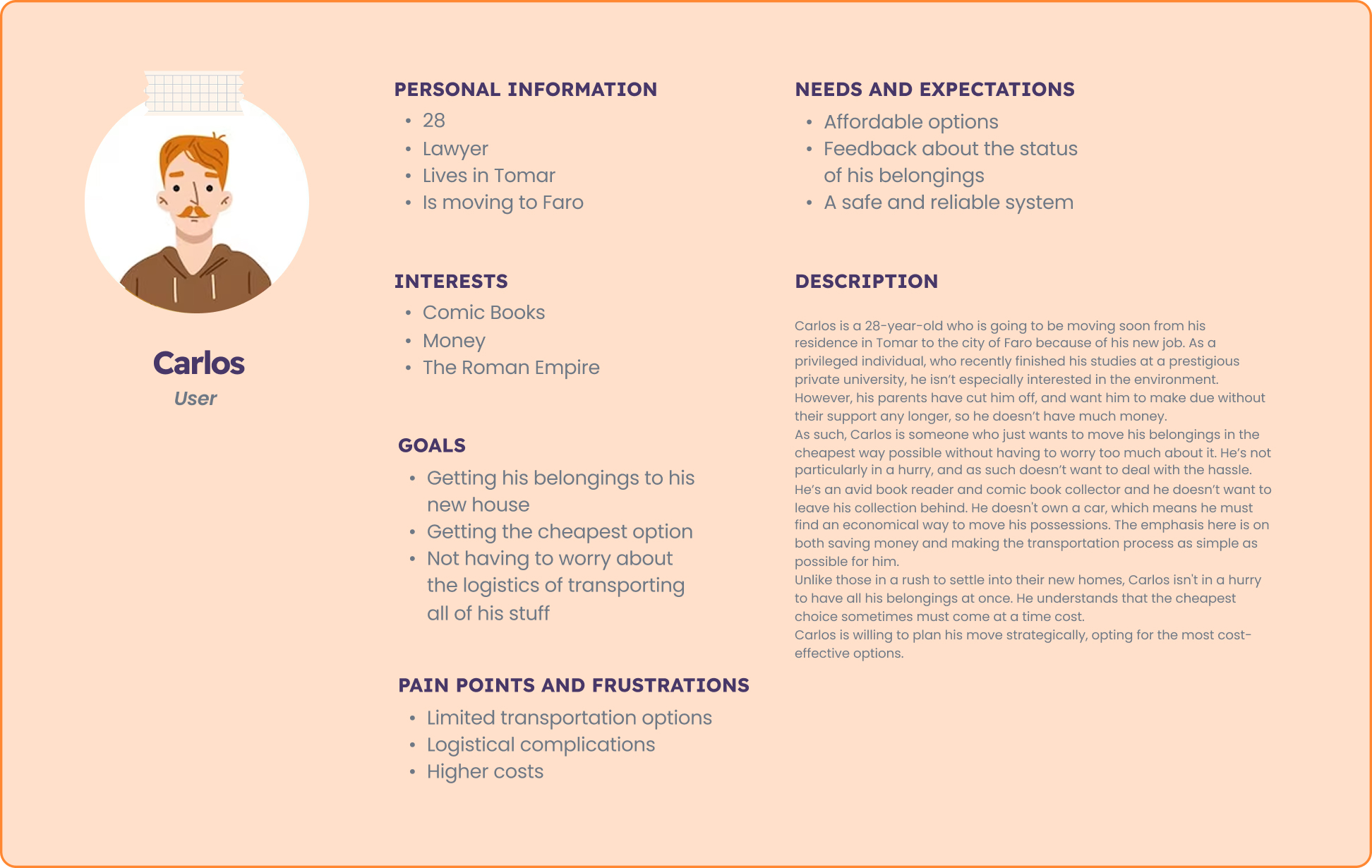
Proto-persona
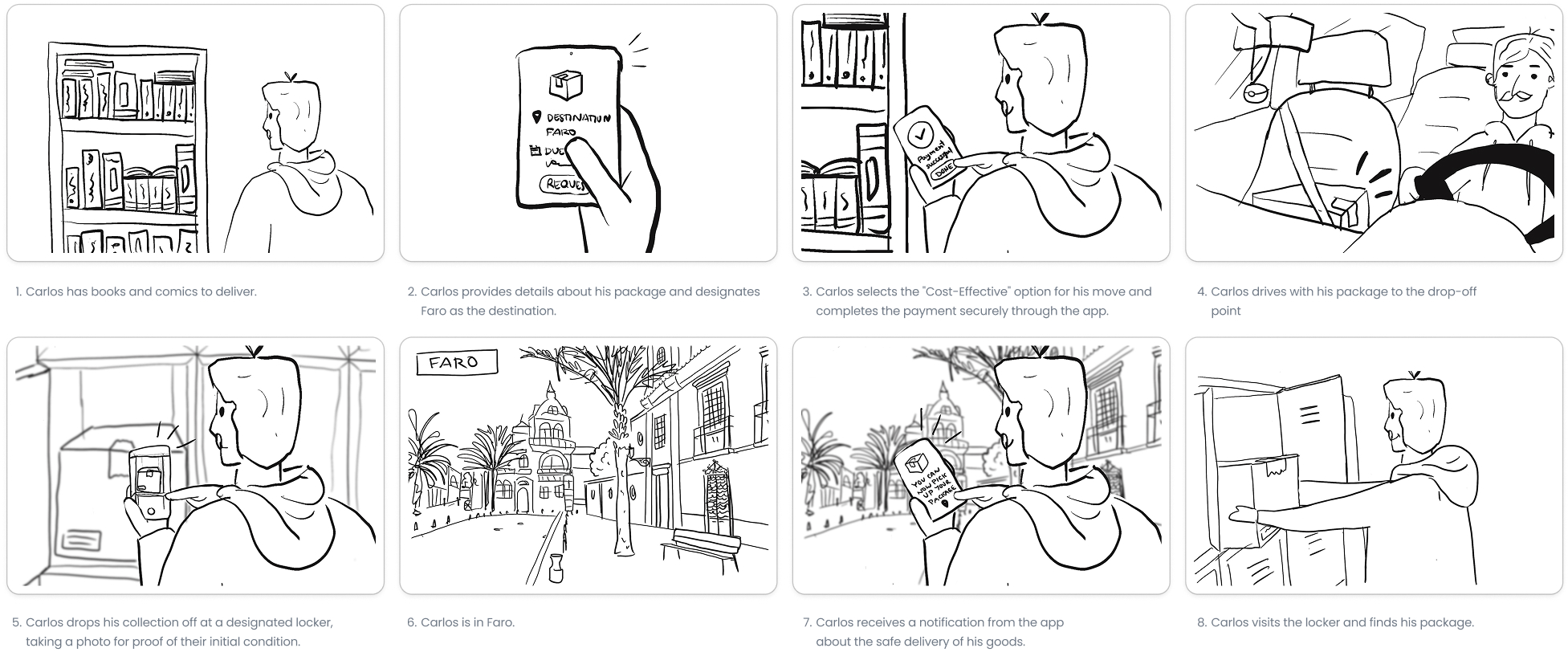
Storyboard
To gain a better understanding of start-up patterns, a few references included features related to parcel shipping, such as access to shipping history, fare time tracking, live rating system, instant notifications, in-app messaging to facilitate seller updates or the parcel whereabouts.
Considering the case study, user journey and persona, a brief outline of how it must ideologically shape started to take form, trying to analyze the app's information architecture before the prototyping phase.
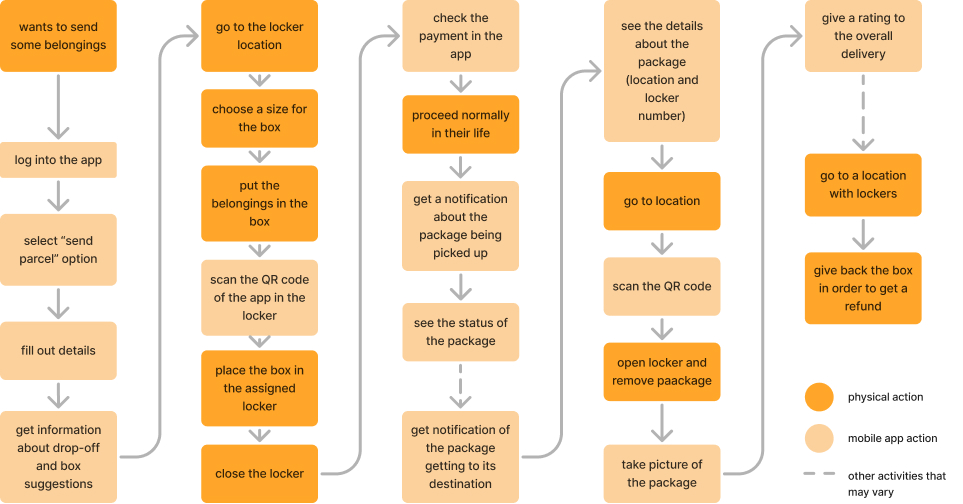
User Scenario Diagram
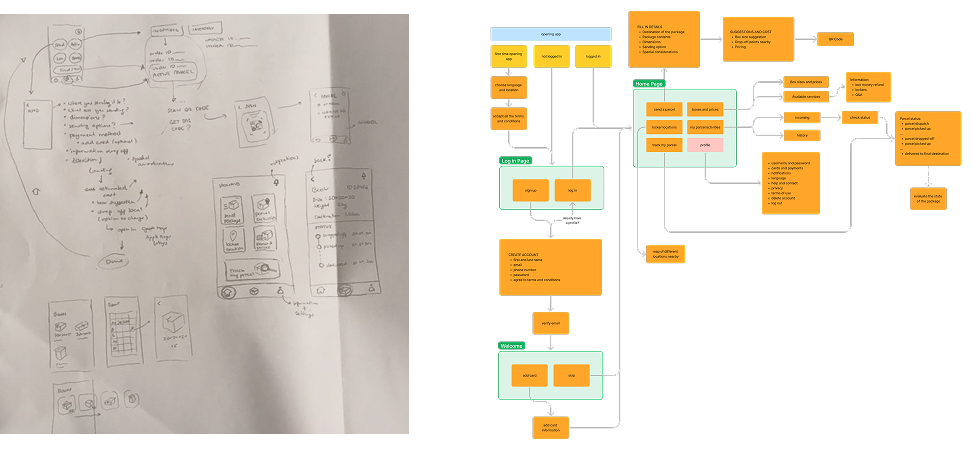
App Information Architecture
Key Outcomes:
- Detailed storyboard and user scenario diagram: Comprehensive visual and structured guide to map out the user's interaction with the system.
- Information architecture: Better understanding of the functionalities within the app after their layout for the development of the prototype.
4. Prototyping
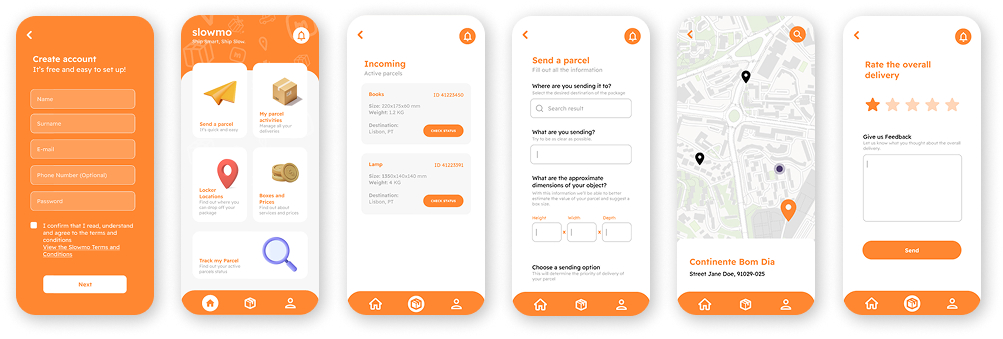
When developing the prototype, special attention was given to ensuring it was both intuitive and visually appealing. Key insights from earlier stages guided consistency throughout the design process.
Particular emphasis was placed on making the package status easily accessible, as it represents one of the app's most frequently used core features.
Key Outcomes:
- High-Fidelity Prototype Development: Created a detailed and functional high-fidelity prototype of some of the main parts in the app.
Takeaways
This project provided valuable experience in designing complex systems and offered insights into a completely new field.
By following the project guidelines, our team was able to develop an innovative idea aimed at improving the efficiency and cost-effectiveness of the goods transportation industry, while aligning with circular economy principles.
Working collaboratively, we leveraged our understanding of effective teamwork, particularly the importance of clear communication when developing individual subsystems that would ultimately come together as a cohesive final product.
Additionally, speaking for and presenting at the Toyota Competition helped me improve my pitching skills and become more comfortable with public speaking.