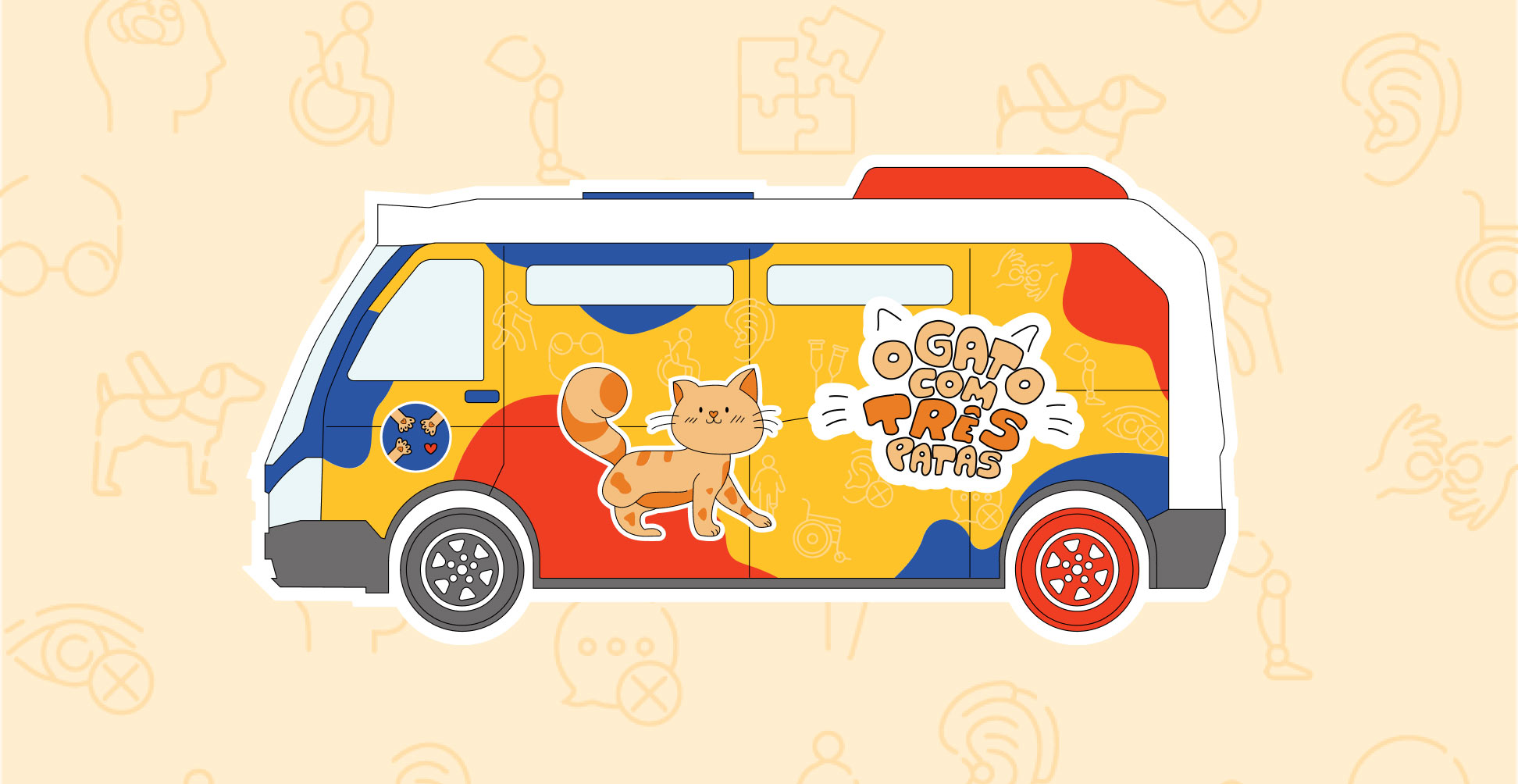
"The Three-Legged Cat" is a mobile museum featuring interactive activities, designed primarily to raise awareness among younger generations about various disabilities and impairments. Its goal is to promote understanding and help normalize these conditions in society, fostering greater inclusivity.
Context
This project was developed as part of the Interaction Design II course, which focused on creating an interaction design solution inspired by the United Nations Sustainable Development Goals (SDGs). In the initial group phase, we selected Goal 4, specifically targets 4.7 and 4.a, as our area of focus. These targets, centered on inclusive and quality education, later served as the foundation for the development of the individual project.
Problem
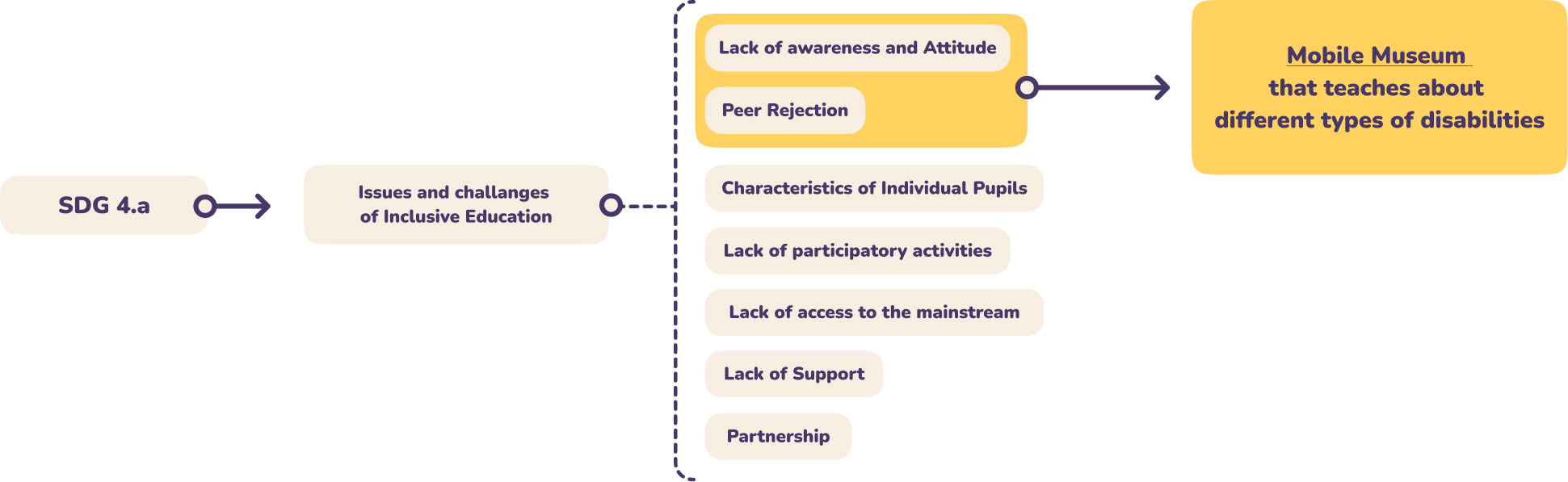
Inclusive education continues to face significant challenges, including a lack of awareness and negative attitudes toward disabilities, peer rejection, limited participatory activities, and insufficient support systems.
These barriers prevent students with disabilities from fully accessing and benefiting from mainstream education, highlighting the need to address social and structural obstacles that hinder true inclusion.
Goal
Raise awareness among younger generations about different disabilities and impairments, with the aim of helping to normalize them in society and promote inclusivity. Seek to teach children how to understand and address these challenges, while fostering the creation of a more effective and inclusive environment for all.
Constraints
- Alignment with SDG Targets: The project had to support inclusive education and promote values of equality, sustainability, and human rights in a way that is age-appropriate.
- Age-Appropriate Communication: Content had to be understandable for children, avoiding overly technical explanations while maintaining respect for the subject matter.
- Accuracy & Sensitivity: Disability representation had to avoid stereotypes or tokenism, ensuring messages are respectful and affirming.
Design Process
1. Initial Definition
The project proposes the creation of an innovative mobile museum aimed at raising awareness among younger generations about various types of disabilities in an engaging and educational way.
Designed as a traveling van, the museum visits primary schools—specifically targeting 3rd and 4th grade students—and offers a series of interactive activities that help children understand and normalize different disabilities in society, fostering inclusivity from an early age.
2. Ideation Phase | Museum
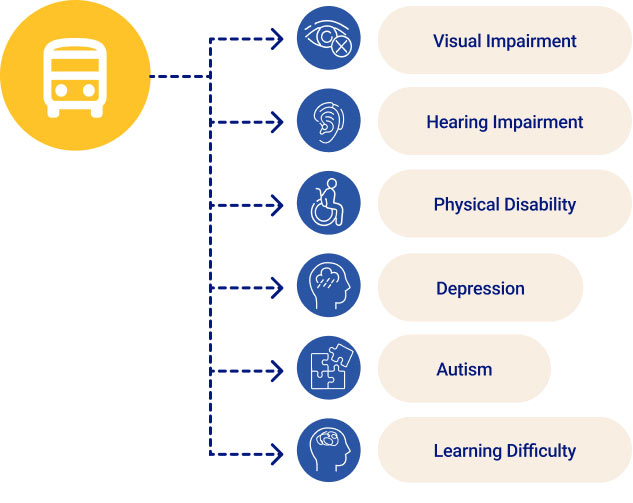
Once the theme was defined, the focus shifted to shaping the activities. The idea was to create six interactive experiences inside the van, each introducing a character with a specific disability through storytelling and playful interaction. Unique floor shapes would represent each activity, guiding children through the space. The exterior would display images and information about various disabilities, adding educational value from the outside. A small, colorful van was chosen for its ability to reach remote areas and to reflect the project's informal, engaging approach to learning.
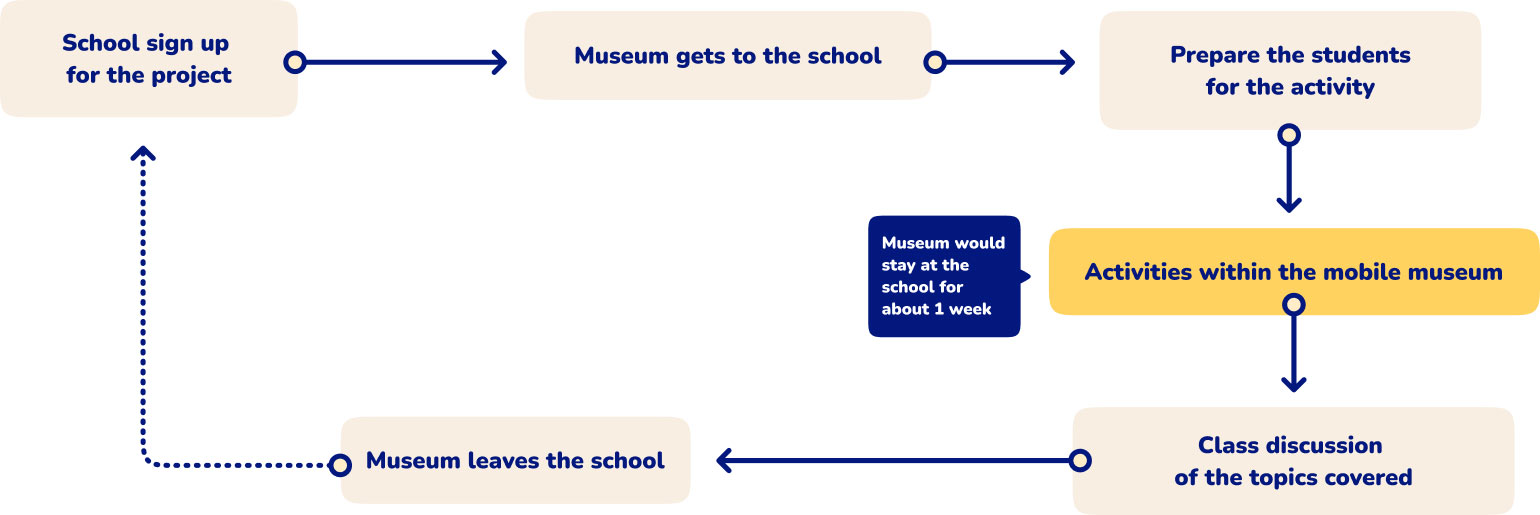
After defining the concept of the mobile museum, the next step was to determine how it would be used in practice. The idea is for the museum to travel from school to school, hosting activities in small group sessions. Each class would be divided so that smaller groups of students could participate at a time, ensuring that every child has the chance to engage meaningfully with the content.
These hands-on experiences would then be followed by classroom discussions, allowing teachers to explore the topics in greater depth, clarify any doubts, and encourage reflection and dialogue among students.
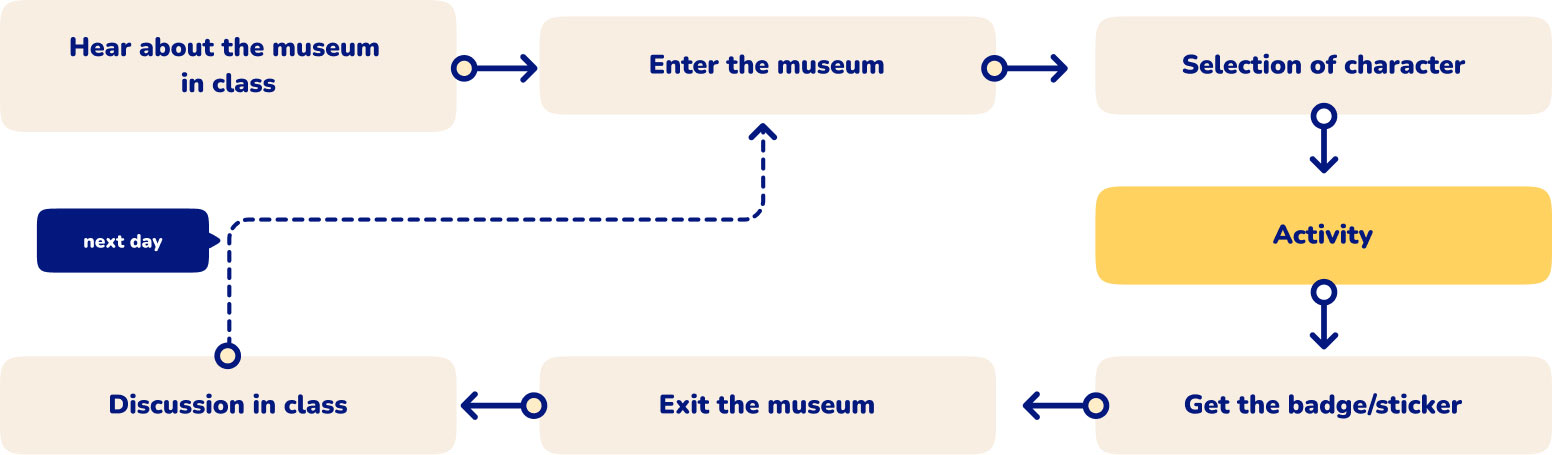
Each activity in the mobile museum could include a unique badge or sticker representing the character the children interact with. These small tokens would serve as personal mementos of the experience, allowing the children to take something tangible home.
The goal is that, when they look at these items later, they are reminded of what they learned and the inclusive message behind the activity.
3. Ideation Phase | Activity
To better visualize how the activities would function, one was developed in more detail—focusing on visual impairment. The activity introduces children to braille by guiding them to write their own names and feel them once printed.
An introductory video also explains different types of visual impairment and how to interact respectfully with visually impaired individuals. To further explore the concept, user flows, 3D models, storyboards, scripts, and sketches were created to visualize how the experience would look and unfold.
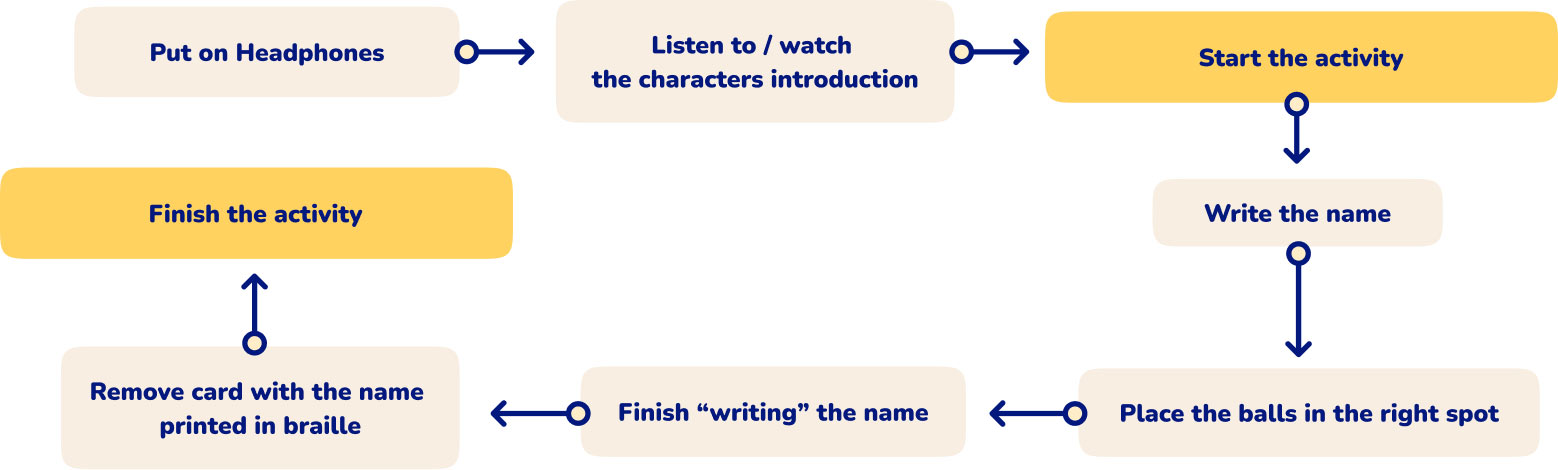
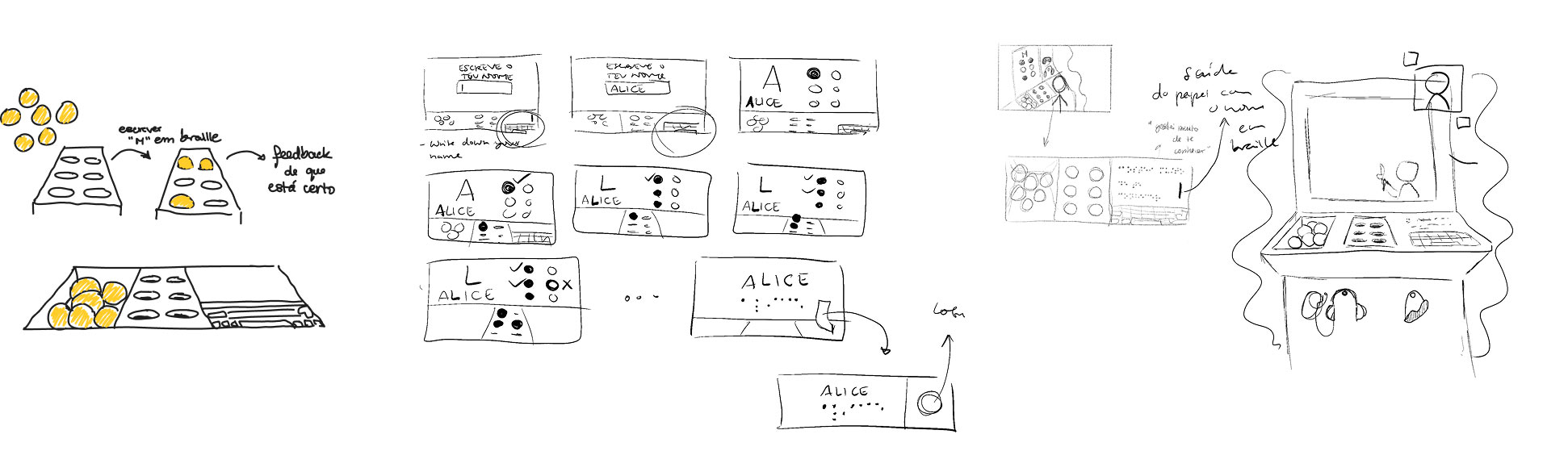
Sketches and wireframes of the activity
Key Outcomes:
- Sketches and user scenario diagram: Developed as a cohesive visual and structural guide to map the user’s interaction with the system and the spatial layout of the experience.
- Video structure and script: Developed a complete narrative structure, including the full audio script, to guide the final animated video and clearly introduce the activity and its educational purpose.
4. Prototype
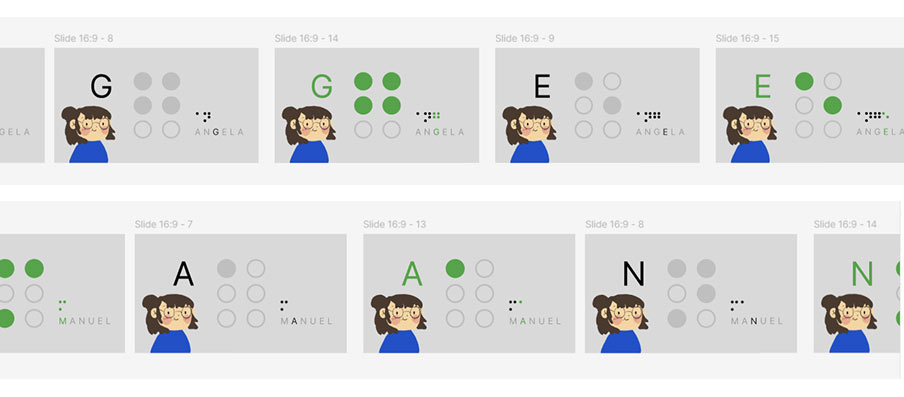
Various prototypes were developed to bring the project to life. A 3D model was created to visualize the physical layout of the mobile museum, while a functional digital prototype was built in Figma to simulate the activity and test user interactions.
To introduce the activity, a video—produced in Portuguese, the original language of the project—was created to explain key aspects of visual impairment and provide a brief overview of the task.
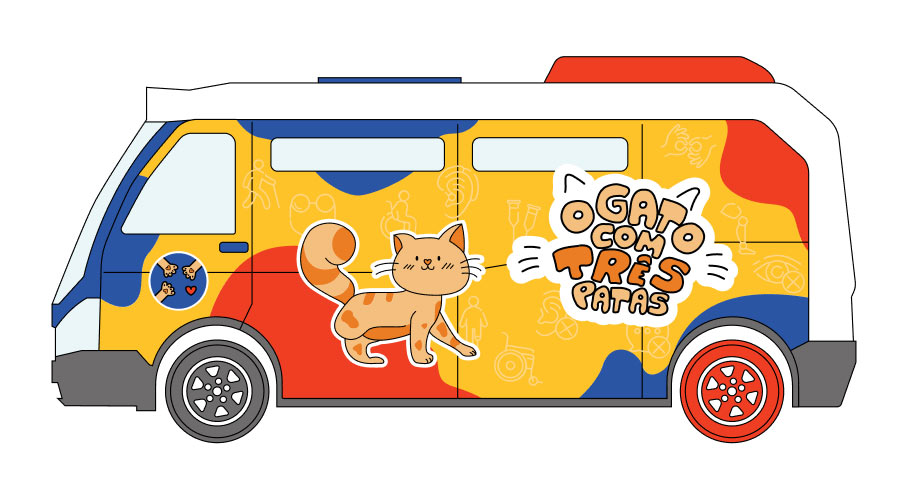
Mockup of the outside of the museum
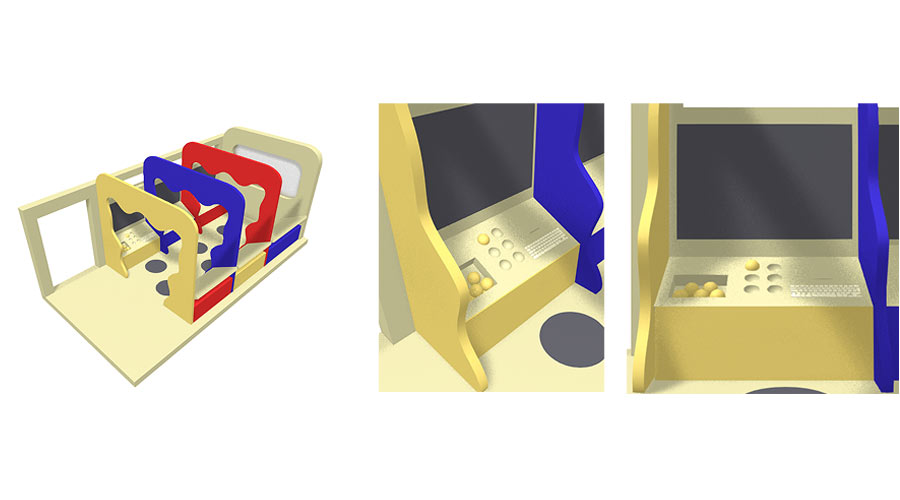
3D model of the indside of the museum and activity
Prototype
Key Outcomes:
- 3D Model of the Mobile Museum: Enabled clear visualization of the spatial layout and design, helping to communicate the physical structure and flow of activities inside the van.
- Interactive Digital Prototype (Figma): Simulated the user experience of the braille activity, allowing for initial testing of interactions and user flow.
- Introductory Video: Produced to explain key concepts of visual impairment and introduce the activity, serving as both an educational tool and part of the prototype experience.
5. Evaluation / Testing and Validation
The evaluation/testing phase of the project involved usability testing of the interactive prototype using the Wizard of Oz method and subsequent user feedback through questionnaires. Five participants, aged 20 to 23, interacted with a physical and digital prototype simulating a child's experience, and then completed the System Usability Scale (SUS), which yielded highly positive results—a 95% average usability score.
Participants found the system easy to use, well-integrated, and reported feeling confident during the activity, with minimal perceived complexity. Additionally, an emotional response questionnaire based on the Geneva Emotion Wheel (GEW) confirmed that the project generated intended emotions of interest and enjoyment, supporting the design's effectiveness in creating engaging, empathetic experiences.
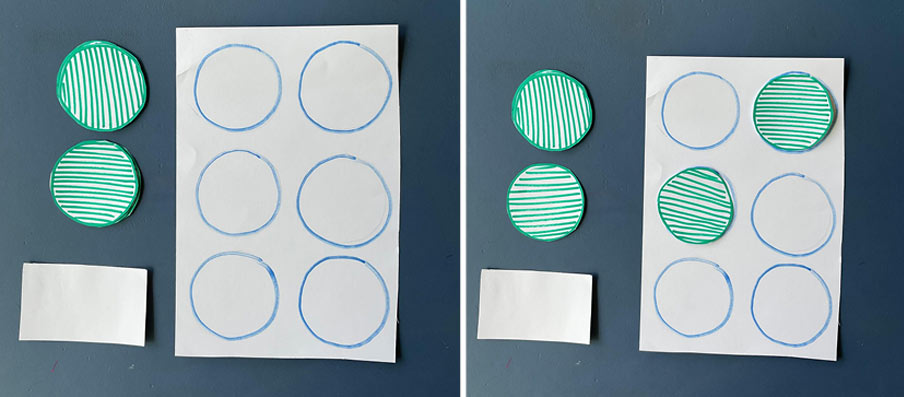
Phisical elements used for the Wizard of Oz testing
Figma prototype for Wizard of Oz testing
Takeaways
The project showed the value of combining physical and digital prototypes to communicate ideas and test interactions effectively. User testing confirmed the design's high usability (95% SUS score) and emotional impact, validating its playful and empathetic approach to learning.
As a designer, the process reinforced the importance of storytelling, prototyping, and user feedback in creating inclusive educational experiences. In the future, testing with children will be essential to fully evaluate the project's effectiveness with its intended audience.